
Filters
Level
Grade
Subject
Subject Area
Subject Topic
Standard(s)
Audience
Keyword
DurationMinutes
4th Grade Symmetry Lesson Plans

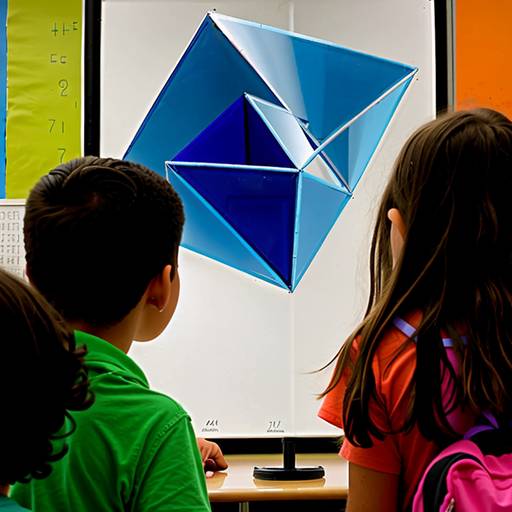
In this engaging 4th-grade math lesson, students will explore the concepts of geometry and symmetry. The lesson begins with an introduction to symmetry through visual examples and a discussion about its significance in everyday life. Students will participate in guided practice using mirrors to identify symmetrical and asymmetrical shapes. They will then move into an independent activity, where they create their own symmetrical designs on white paper, utilizing markers and rulers to enhance their artwork. Following the creation process, students will display their designs in a “Symmetry Gallery Walk” to share their work and understanding with classmates. The lesson concludes with a reflection on what they learned and the distribution of a “Symmetry Scavenger Hunt” worksheet for homework, encouraging students to find and recognize symmetry in their environment. Assessment will focus on student participation, their finished designs, and the completed scavenger hunt. Extensions for advanced students and modifications for those needing additional support are also included to cater to diverse learning needs.
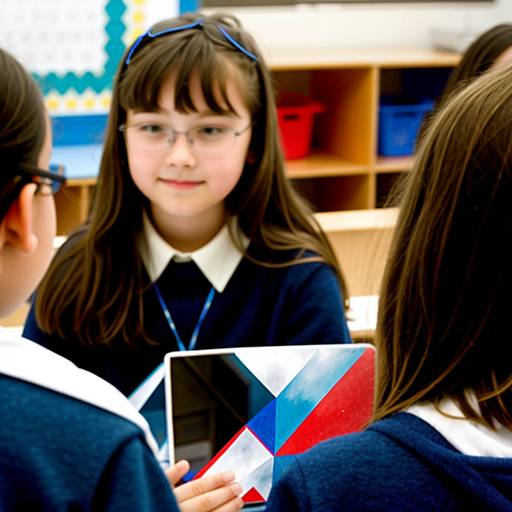
In this 4th-grade mathematics lesson, students will explore the concepts of geometry and symmetry through interactive activities. The lesson begins with a discussion to activate prior knowledge and introduce key vocabulary related to symmetry and geometric shapes. Students will learn to draw basic geometric shapes and identify lines of symmetry using mirrors to visualize reflective symmetry.
Following direct instruction, students will engage in guided practice by drawing symmetrical shapes on graph paper and adding creative designs. They will then work independently to create patterns using their drawn shapes, reinforcing their understanding of symmetry through hands-on exploration. Students will have the opportunity to share their creations with the class, discussing the symmetrical elements in their work.
Assessment will be based on participation and understanding demonstrated during activities, as well as an exit ticket requiring students to draw and label a symmetrical shape. The lesson includes differentiation strategies and extensions, such as a symmetry scavenger hunt, to cater to various learning needs and interests. Overall, the lesson aims to deepen students' understanding of geometric concepts while fostering creativity and critical thinking.