
Filters
Level
Grade
Subject
Subject Area
Subject Topic
Standard(s)
Audience
Keyword
DurationMinutes
4th Grade Perimeter Lesson Plans

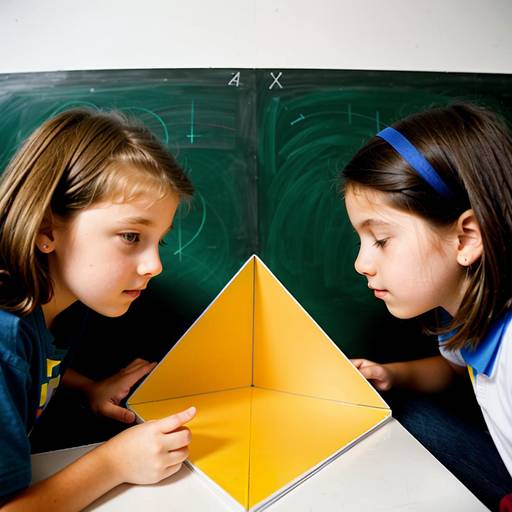
In this 4th-grade math lesson, students will explore geometric shapes and learn about perimeter. They will begin with an introduction to common shapes such as squares, rectangles, triangles, and circles, discussing their properties and real-life applications. Following this, students will learn how to calculate the perimeter for each shape using specific formulas.
During guided practice, they will work on a worksheet where they will calculate the perimeter of various shapes. This will be followed by a hands-on activity where students, in pairs, will create their own shapes using graph paper and scissors, measure the sides, and calculate the perimeter of their creations.
At the end of the lesson, students will have the opportunity to share their work, reflecting on their learning experiences. The lesson will be concluded with a quick quiz or review game to reinforce the concepts covered. Assessment will focus on students' worksheet completion, participation in the activity, and a short exit ticket to capture their learning. Differentiation strategies will be employed to support varying levels of understanding among students.
This 4th-grade math lesson focuses on geometry and the concept of perimeter. Students will begin by identifying and classifying various geometric shapes such as triangles, rectangles, squares, and circles. The instructor will introduce the concept of perimeter, explaining it as the total distance around a shape and demonstrating how to calculate it using specific formulas for each shape.
In a collaborative group activity, students will use cut-outs and rulers to measure the sides of different shapes and compute their perimeters, allowing them to apply what they've learned in a hands-on manner. Following this, learners will complete a worksheet that includes various shapes, requiring them to calculate the perimeter based on given dimensions or measurements.
The lesson will conclude with a class discussion to review the key concepts covered and an exit ticket exercise where students share their calculations and any lingering questions. Assessments will be conducted through observation during group work, evaluation of worksheets, and the exit tickets to determine student understanding and comfort with the material. Additionally, opportunities for extension activities will be provided to help students connect perimeter to real-world scenarios.
In this fourth-grade mathematics lesson, students will explore geometric shapes and learn how to calculate their perimeters. The session begins with an engaging discussion about familiar shapes encountered in everyday life, followed by a clear explanation of perimeter and its significance. Students will be introduced to various geometric shapes, including squares, rectangles, triangles, and circles, along with the respective formulas for calculating their perimeters.
Through guided practice, students will work in small groups to measure the sides of provided shape cutouts, calculating the perimeter collaboratively. Following this, they will complete independent worksheets featuring a range of shapes that require perimeter calculations, allowing the teacher to assess their understanding through observation and worksheet evaluation.
The lesson concludes with a wrap-up discussion, reinforcing the concept of perimeter and its practical applications. Extension activities for advanced learners and additional support for those needing it are also included, ensuring that all students can engage meaningfully with the content. This interactive and comprehensive approach aims to foster students' geometric understanding and measurement skills.
In this 4th-grade math lesson plan, students will explore the concept of perimeter through hands-on learning and real-world applications. The lesson begins with an introduction to shapes and the definition of perimeter, followed by direct instruction on the formulas for calculating the perimeter of rectangles, squares, and triangles.
Students will engage in guided practice with worksheets featuring various geometric shapes, working in pairs to calculate perimeters while explaining their reasoning to one another. Following this, a scavenger hunt will allow students to measure and record the perimeters of objects around the classroom using string or yarn, fostering a deeper connection to the concept.
The lesson concludes with a shared reflection on their discoveries and the significance of perimeter in everyday life. Assessments will include observations during activities and evaluation of the completed worksheets. Differentiation strategies will be implemented to provide support for struggling learners and challenges for advanced students, ensuring that all students benefit from the lesson.