
Filters
Level
Grade
Subject
Subject Area
Subject Topic
Standard(s)
Audience
Keyword
DurationMinutes
4th Grade Angles Lesson Plans


In this 4th-grade math lesson, students will explore the concepts of geometry and angles. They will learn to identify and classify different types of angles—acute, right, and obtuse—through a combination of direct instruction and hands-on activities. The lesson begins with a discussion about angles in everyday life, followed by a demonstration on how to measure angles using a protractor.
Students will practice measuring and classifying angles on the whiteboard and then engage in an independent scavenger hunt to find and record examples of angles around the classroom or at home. The lesson concludes with students sharing their findings, reinforcing their understanding of angle types, and participating in a quick identification quiz.
Assessment will involve observing student participation and reviewing their scavenger hunt worksheets to ensure comprehension of the material. Opportunities for extensions will also be provided for advanced learners. Overall, the lesson aims to create an interactive and relatable learning experience centered around the fundamental concepts of angles in geometry.
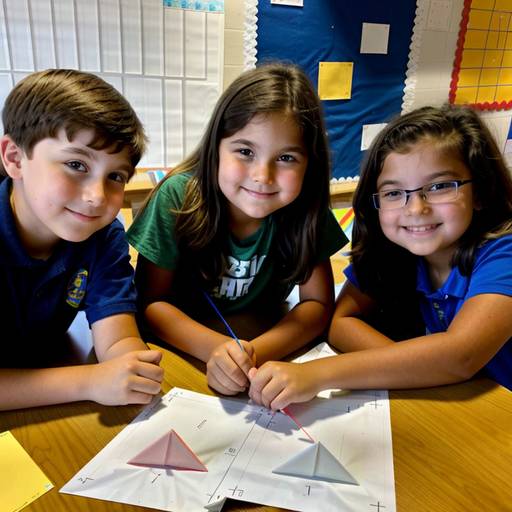
In this 4th grade math lesson plan, students will explore the concepts of geometry and angles, focusing on identifying and classifying angles as acute, right, and obtuse. The lesson begins with a discussion about angles in everyday life, followed by direct instruction that includes definitions and visual demonstrations on the whiteboard. Students will then engage in guided practice by creating and measuring angles using protractors and rulers. Afterward, they will complete worksheets that involve identifying angle types and practicing measurements independently. The session concludes with a review and optional extension activity that encourages students to find and document examples of angles and shapes in their environment. Assessment will include observing student participation and reviewing their completed worksheets to ensure understanding of the material. Overall, this lesson aims to foster a foundational understanding of angles and their applications in geometry.

This 4th-grade math lesson focuses on geometry and angles, specifically teaching students to identify and classify acute, right, and obtuse angles. The lesson begins with a discussion about angles and their importance in real-world contexts, followed by a visual presentation of the different types of angles. Students are guided through measuring angles using a protractor, working collaboratively to practice angle identification and classification on worksheets. They then create their own angles and accompany them with real-world examples on a poster. The lesson concludes with a sharing session where students discuss their work, reinforcing their understanding of the concepts presented. Assessment is conducted through the collected worksheets and group interactions, with differentiation strategies in place to support learners at varying skill levels. This engaging and hands-on lesson helps students connect geometry to their everyday lives.
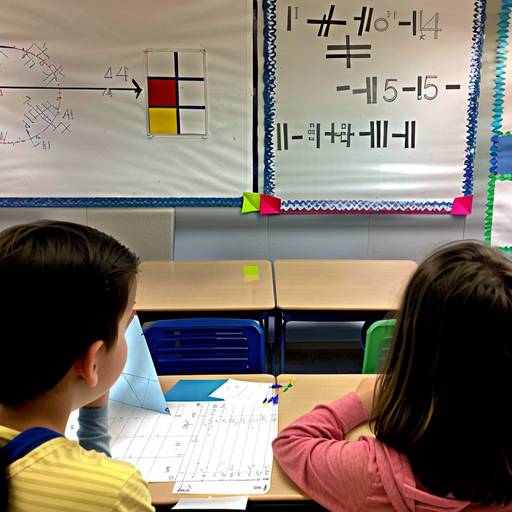
In this 4th-grade math lesson, students will explore the concept of angles through a combination of discussions, hands-on activities, and creative projects. The lesson begins with a warm-up discussion, where students identify different types of angles—acute, right, and obtuse—and observe examples in their daily lives.
Following this, they will engage in an angle scavenger hunt, working in small groups to find and document instances of each type of angle around the classroom or school. Next, students will receive a demonstration on how to measure angles using a protractor, followed by practice worksheets to reinforce their measurement skills.
In a creative activity, students will design their own shapes that incorporate various angles, labeling each angle with its measurement and classification. They will then present their designs to the class, further solidifying their understanding of angles. The lesson concludes with a summary of key concepts and an assignment for students to find additional examples of angles in their homes.
Assessment will be based on participation, accuracy in measuring angles, and the quality of the shapes created by the students, ensuring that all learners are engaged and challenged appropriately.