
Filters
Level
Grade
Subject
Subject Area
Subject Topic
Standard(s)
Audience
Keyword
DurationMinutes
4th Grade Subtracting Fractions Lesson Plans

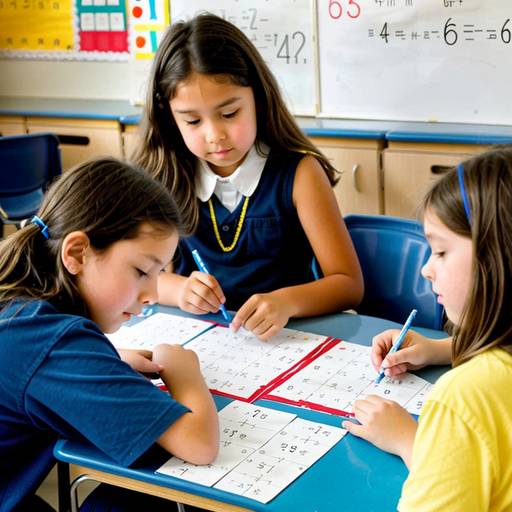
In this 4th-grade math lesson, students will focus on understanding and subtracting fractions with like denominators. The session begins with a brief review of fractions, including their components and visual representations using fraction circles. Students will learn the process of subtracting fractions through direct instruction and guided practice involving visual aids. After working collaboratively on a worksheet, they will have the opportunity to engage in a hands-on activity using real-world objects, such as pizza slices or fruit pieces, to act out fraction subtraction problems. The lesson concludes with a recap of the key concepts, followed by individual assessments through completed worksheets. To accommodate different learning needs, the lesson includes extensions for advanced learners and additional support for those who require it. Overall, this lesson aims to provide an interactive and practical approach to mastering the subtraction of fractions.
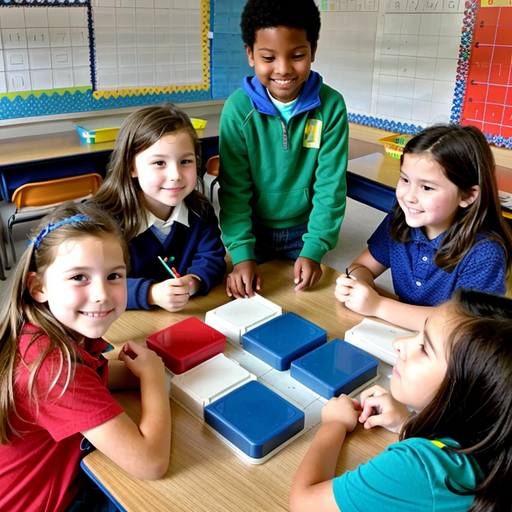
In this 4th-grade math lesson, students will explore the concept of subtracting fractions with like denominators. The lesson aims to ensure that students grasp the foundational steps for subtracting fractions, including keeping denominators the same, subtracting the numerators, and simplifying the resulting fraction when possible.
The lesson begins with a review of fractions to gauge prior knowledge, followed by direct instruction that includes a step-by-step explanation and a visual demonstration using fraction circles or strips. During guided practice, students work on worksheets with fraction subtraction problems, allowing for collaboration and peer support as they practice the concepts.
Students then engage in a hands-on activity in small groups where they tackle real-world scenario cards that require them to apply their understanding of subtracting fractions. They create visual representations of these problems using fraction materials, facilitating a deeper understanding through tactile learning.
The lesson concludes with a review of key concepts, and students share their group scenarios with the class. An exit ticket activity allows students to individually demonstrate their understanding by writing and solving a subtraction fraction problem. The lesson incorporates differentiation to support diverse learning needs and emphasizes observation and assessment to gauge student comprehension and engagement.
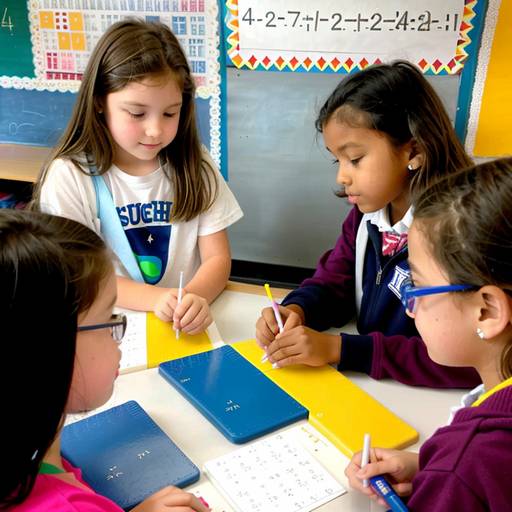
This lesson plan is designed for 4th grade students and focuses on the concept of subtracting fractions with like denominators. The lesson begins with a review of fractions and an introduction to subtraction using visual aids such as fraction circles or bars. Students learn to subtract fractions by focusing on the numerators while keeping the denominators constant, followed by a demonstration with examples and guided practice in pairs. Independent practice allows students to work on fractional subtraction problems, including word problems related to real-life scenarios. The class concludes with a review of key concepts and student sharing of their solutions, providing an opportunity for assessment and addressing any lingering questions. Differentiation strategies are employed to support diverse learning needs, and a homework assignment reinforces the day’s learning by combining practice with real-world applications.

In this 4th-grade math lesson, students explore the concept of subtracting fractions with like denominators. The lesson begins with an engaging hook featuring a real-life scenario related to cooking, which leads to a discussion about the use of fractions in daily life. The instructor introduces the concept of subtracting fractions by explaining the process of subtracting only the numerators while keeping the denominators consistent. Visual aids, such as fraction circles or strips, are utilized to reinforce understanding.
Students participate in guided practice by solving a series of fraction subtraction problems collaboratively, followed by independent work on real-world word problems involving fraction subtraction. The lesson concludes with a class discussion on the solutions to these problems, allowing students to reflect on their learning and build confidence in their skills.
Assessment occurs through participation, accuracy in worksheets, and engagement in discussions. Differentiation strategies ensure that both advanced learners and those needing additional support can succeed. The instructor plans to reflect on the effectiveness of the lesson and consider adjustments for future instruction on fractions.