
Filters
Level
Grade
Subject
Subject Area
Subject Topic
Standard(s)
Audience
Keyword
DurationMinutes
4th Grade Reading Comprehension Lesson Plans


In this 4th-grade Language Arts lesson, students will explore the elements of storytelling, focusing on characters, setting, problem, and solution to enhance their reading comprehension. The lesson begins with an interactive discussion where students share their favorite stories, activating their prior knowledge. A selected story is read aloud, allowing students to listen for key elements while engaging in guided discussions about character motivations.
Following the read-aloud, students will work in small groups to complete a graphic organizer that outlines the story's main components based on their assigned section. This collaborative activity aims to deepen their understanding of how characters respond to challenges throughout the narrative.
The lesson concludes with group presentations, where each team shares their summaries and insights on character decisions, fostering a reflective discussion on the impact of these choices on the story's outcome. Assessment will be conducted through observations during discussions and by collecting the graphic organizers to gauge student comprehension. Extensions will be provided for advanced learners, while accommodations will be made for those needing additional support. As homework, students will apply what they've learned by identifying story elements in another book of their choice.
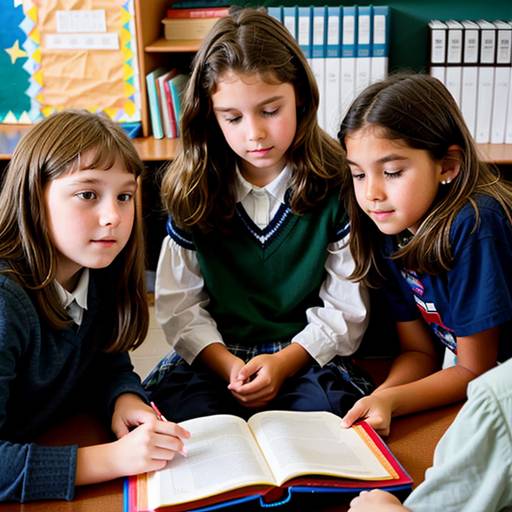
This 4th-grade Language Arts lesson plan focuses on enhancing students' reading comprehension through the exploration of a fictional story. The lesson begins with a discussion about the elements that make stories engaging, followed by a read-aloud session of a selected short fiction text. Students then work in small groups to analyze different story components—such as characters, setting, and plot—using graphic organizers. A whole-class discussion allows for sharing insights and understanding the story's conflict and resolution. To reinforce comprehension, students reflect individually by summarizing the story and sharing their thoughts with a partner. Assessment includes observation during group work, evaluation of graphic organizers, and collection of written reflections. The lesson encourages collaboration, critical thinking, and the application of comprehension skills to foster a greater appreciation for fiction. Extensions include creating original stories for future sharing and exploring additional related texts.