
Filters
Level
Grade
Subject
Subject Area
Subject Topic
Standard(s)
Audience
Keyword
DurationMinutes
3rd Grade Energy Lesson Plans

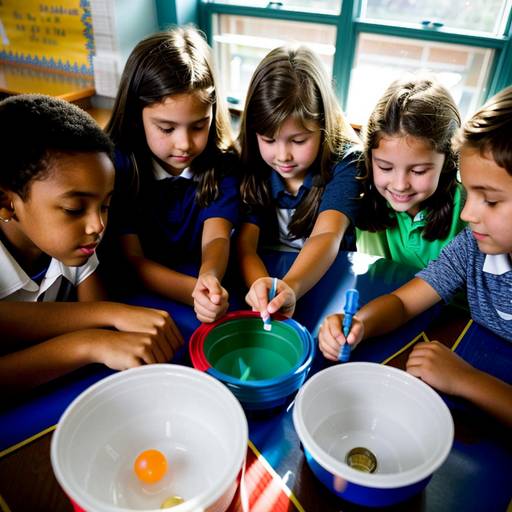
In this engaging 3rd-grade science lesson, students will explore the concept of energy and its various forms, focusing on how energy can transform from one type to another. The lesson will begin with a discussion to pique students' interest and gather their initial thoughts about energy in everyday life. Following this introduction, students will learn about different forms of energy, such as kinetic, potential, thermal, and electrical, through direct instruction.
The main part of the lesson will involve hands-on activities at various stations. Students will participate in experiments that demonstrate energy transformations, including a balloon rocket, a solar-powered toy car, and a flashlight. This interactive approach will help them observe and understand the principles of energy transformation in real-time. After the activities, students will regroup for a class discussion to share their observations and insights.
To reinforce learning, each student will complete a worksheet where they can illustrate or describe an energy transformation they witnessed during the session. The lesson concludes with a review of the key concepts, encouraging students to articulate their understanding of energy and its transformations. Through this lesson, students will develop a foundational comprehension of energy, its types, and transformations in a fun and interactive manner.
In this 3rd-grade science lesson, students will explore sound as a form of energy that is created by vibrations. The lesson begins with a discussion to gauge prior knowledge about sound, followed by a demonstration using a tuning fork to illustrate how sound travels through vibrations.
Students will then participate in group activities that include experimenting with rubber bands to observe how tension affects pitch, using slinky toys to visualize sound waves, and exploring the production of sound by inflating and releasing balloons. After these hands-on activities, the class will regroup to discuss their findings, focusing on the characteristics of sound and vibrations.
To conclude, students will reflect on what they learned by drawing a picture of a sound they enjoy and describing how it is made. Assessment will include collecting their drawings and conducting a quick verbal quiz on the concepts covered. This engaging lesson emphasizes active learning and critical thinking, allowing students to better understand the relationship between sound, vibration, and energy.