
Filters
Level
Grade
Subject
Subject Area
Subject Topic
Standard(s)
Audience
Keyword
DurationMinutes
3rd Grade Energy Lesson Plans

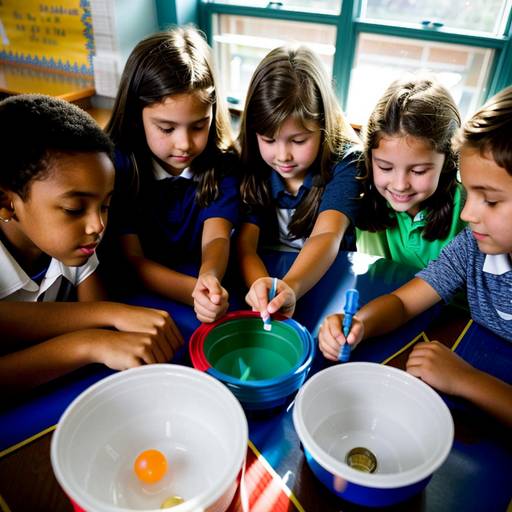
In this engaging 3rd-grade science lesson, students will explore the concept of energy and its various forms, focusing on how energy can transform from one type to another. The lesson will begin with a discussion to pique students' interest and gather their initial thoughts about energy in everyday life. Following this introduction, students will learn about different forms of energy, such as kinetic, potential, thermal, and electrical, through direct instruction.
The main part of the lesson will involve hands-on activities at various stations. Students will participate in experiments that demonstrate energy transformations, including a balloon rocket, a solar-powered toy car, and a flashlight. This interactive approach will help them observe and understand the principles of energy transformation in real-time. After the activities, students will regroup for a class discussion to share their observations and insights.
To reinforce learning, each student will complete a worksheet where they can illustrate or describe an energy transformation they witnessed during the session. The lesson concludes with a review of the key concepts, encouraging students to articulate their understanding of energy and its transformations. Through this lesson, students will develop a foundational comprehension of energy, its types, and transformations in a fun and interactive manner.
In this 3rd-grade science lesson, students explore the concepts of potential and kinetic energy through engaging activities and discussions. The lesson begins with a brief introduction to energy and its two main types, supported by visual examples from everyday life. Students then participate in a hands-on activity where they work in small groups to create ramps for toy cars or marbles. They experiment with different ramp heights to observe how potential energy is converted into kinetic energy. Measurements of how far the cars travel are recorded, promoting teamwork and critical thinking. The lesson concludes with a class discussion that reinforces the concepts and encourages students to share personal examples of potential and kinetic energy. Assessments include observation during activities and the recording of experimental results, ensuring students grasp the foundational principles of energy.
This lesson plan focuses on introducing 3rd-grade students to the concept of energy in physical science through interactive activities and discussions. Students begin by exploring various forms of energy, such as kinetic and potential energy, while engaging in a hands-on experience that involves rolling toy cars down inclined planes and creating balloon rockets. Through these activities, they observe energy transformations in action and measure their results, fostering a deeper understanding of how energy works in everyday life.
The lesson includes a group discussion where students share their findings and reflections, reinforcing their learning with energy-related vocabulary. To wrap up the lesson, students write down insights they gained and questions they still have, allowing for assessment of their understanding. Extensions offer opportunities for further exploration at home or through a field trip. The lesson is designed to be engaging and accessible, with provisions made for differentiation based on student needs. Overall, it aims to instill a foundational comprehension of energy and its various forms while encouraging scientific inquiry and collaboration among students.