
Filters
Level
Grade
Subject
Subject Area
Subject Topic
Standard(s)
Audience
Keyword
DurationMinutes
3rd Grade Note Names Lesson Plans

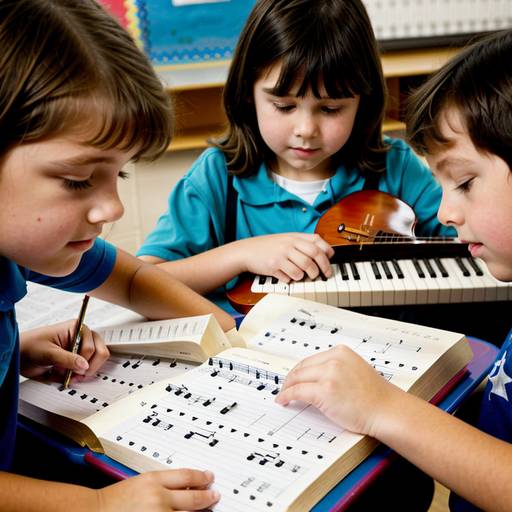
In this 50-minute lesson plan for 3rd graders, students will explore the basics of music theory by learning to identify and name fundamental musical notes, including whole notes, half notes, quarter notes, and eighth notes, as well as understanding their values. The lesson begins with a discussion about music and the importance of note names, followed by an interactive matching game where students pair note symbols with their names in small groups.
Next, students will create their own musical staff on printed worksheets, drawing and labeling different types of notes. The lesson includes a hands-on component, where students will play a simple melody on classroom instruments, reinforcing their understanding of note values in a musical context. To conclude, a quick oral quiz will assess students’ knowledge of the note names and values, and optional recording of their performance may be included for further assessment.
Extensions and reflection opportunities are provided to enhance learning and gather student feedback. This engaging approach allows students to learn music theory actively while fostering creativity and collaboration.

In this 3rd-grade music lesson, students will explore fundamental concepts of music theory, specifically focusing on identifying and naming musical notes on the staff. The lesson begins with a warm-up activity where students collectively sing a familiar song, reinforcing their engagement.
Throughout the session, students will create their own staff and label the notes, participate in a flashcard relay race to match note names with their positions on the staff, and play a game of bingo using note names. These activities promote teamwork and active learning.
The lesson concludes with a review of key concepts, encouraging students to share what they learned and connecting their knowledge to real music. As a follow-up, students will be invited to practice writing notes at home or identifying them in music they enjoy, solidifying their understanding in a fun and interactive way. Assessment will focus on student participation and their ability to recognize note names during activities. Adaptations can be made for future lessons based on student feedback and engagement.

In this engaging music theory lesson for 3rd-grade students, the focus is on helping them identify and name basic musical notes (A, B, C, D, E, F, G) and understand the structure of a musical staff and treble clef. The lesson begins with an introduction to the significance of music and the basics of the staff, including the placement of notes. Students participate in an interactive game, "Note Name Relay," where they work in groups to identify notes by collecting flashcards and representing them accurately on the staff.
Following the game, students complete worksheets to reinforce their understanding of note names and staff positions. The lesson concludes with a review of key concepts, encouraging students to share their thoughts and emphasizing the importance of practicing at home. Assessment is based on participation and worksheet completion, and possible extensions include introducing basic rhythms and encouraging instrument play. Overall, the lesson creates a dynamic and supportive learning environment for foundational music theory.
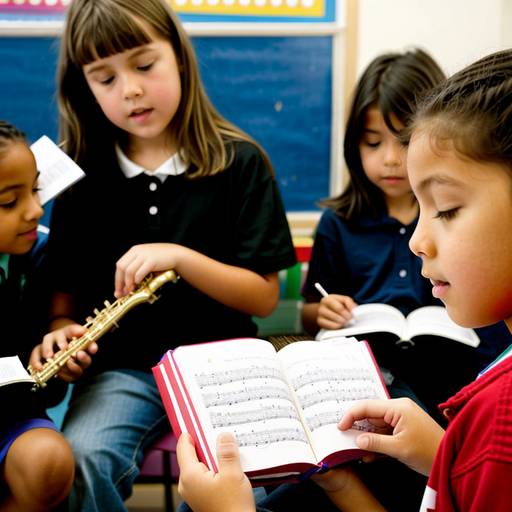
In this 3rd-grade music lesson, students will explore the fundamentals of music theory, specifically focusing on identifying and naming basic musical notes: whole notes, half notes, and quarter notes. The lesson begins with an interactive discussion to introduce these notes and their corresponding beats.
Students will participate in a fun game utilizing flashcards to reinforce their understanding, clapping and tapping out rhythms as they identify each note. They will then practice with percussion instruments, playing along to a steady beat and applying their knowledge of rhythms.
To further solidify their learning, students will complete worksheets that challenge them to identify note names and draw notes based on given rhythms. The class will conclude with a group reflection, allowing students to share their insights and favorite activities from the lesson. The assessment will be based on observational evaluations during activities and the completion of worksheets, ensuring that each student reaches a foundational understanding of musical note names and rhythms. Extensions and accommodations will be provided to enhance learning for all students.