
Filters
Level
Grade
Subject
Subject Area
Subject Topic
Standard(s)
Audience
Keyword
DurationMinutes
3rd Grade Properties Lesson Plans

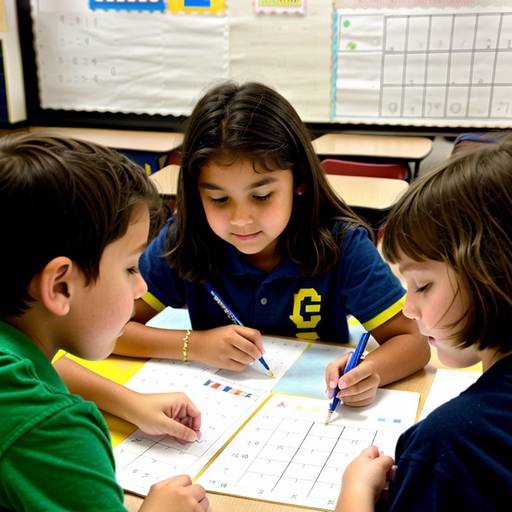
In this engaging math lesson for 3rd graders, students will explore the properties of multiplication, specifically the commutative and associative properties. The lesson begins with a review of basic multiplication concepts, followed by direct instruction where students learn how changing the order or grouping of numbers does not affect the product.
Utilizing manipulatives and flashcards, students will work in small groups to practice applying these properties to solve multiplication problems. This collaborative activity fosters teamwork and allows for peer learning. After guided practice, students will complete a worksheet independently to reinforce their understanding of the properties.
The lesson concludes with a class discussion where students share insights from the day's activities, followed by a brief exit ticket to capture their thoughts and any lingering questions. Assessment will be based on participation, worksheet completion, and reflections provided on the exit tickets. Modifications are included to support diverse learners, while extension activities encourage creativity and deeper understanding of the multiplication concepts.
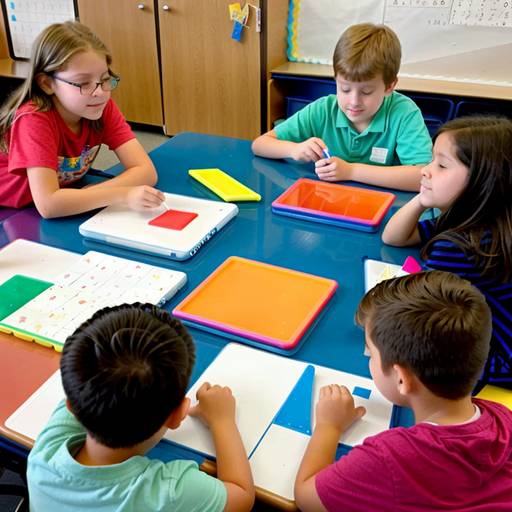
In this 3rd-grade math lesson, students will explore multiplication properties, focusing on the Commutative, Associative, and Distributive properties. The lesson begins with a review of multiplication facts, followed by an introduction to the properties through direct instruction, using examples presented on the whiteboard. Students will then engage in guided practice in small groups, solving multiplication problems using the properties and preparing brief presentations to showcase their understanding. Independent practice will involve worksheets where students apply the properties to various multiplication problems. The class will conclude with group discussions and a quick game to reinforce the concepts learned. Assessment will be conducted through worksheets and observations during group presentations, and appropriate differentiation strategies will be implemented to support all learners.
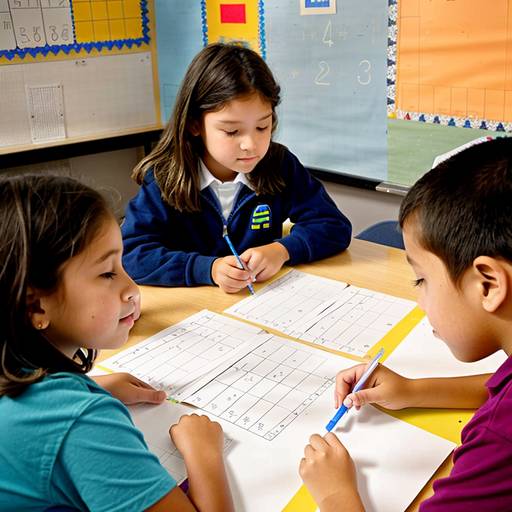
This lesson plan focuses on teaching 3rd-grade students the concept of multiplication and its associated properties, specifically the Commutative, Associative, and Identity properties. The lesson begins with an engaging discussion about the real-life applications of multiplication, followed by a mini-lesson where these properties are introduced with clear definitions and visual demonstrations using counters.
Students then participate in guided practice, identifying properties in examples and solving simple multiplication problems. For independent practice, they complete a worksheet that reinforces their understanding and engage in a partner activity where they create their own multiplication problems that utilize these properties.
To foster collaboration and creativity, students work in small groups to create colorful posters illustrating one of the properties and present their work to the class. The lesson concludes with a review and an exit ticket where students write examples of each property. Throughout the lesson, assessment occurs through observation, worksheet completion, and group presentations, ensuring that students not only grasp the concept of multiplication but also understand how to apply its properties effectively. Extensions and support are offered to cater to varying student needs.
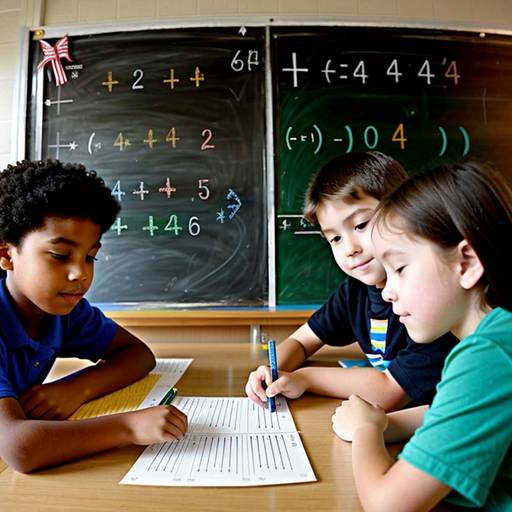
In this 3rd-grade math lesson plan, students will explore the concept of multiplication by understanding it as repeated addition through engaging activities. The lesson begins with a real-life scenario involving grouping objects to illustrate the basic idea of multiplication, followed by a clear explanation of key properties: Commutative, Associative, and Distributive.
Students engage in a group activity where they use manipulatives to create arrays that represent assigned multiplication problems, fostering collaborative learning and understanding of the properties. After this guided practice, students complete a worksheet independently, allowing them to apply what they've learned and draw arrays or groups to represent multiplication sentences.
The lesson concludes with a recap of the concepts discussed, encouraging students to share their insights. Assessment is conducted through observation during group activities and by reviewing worksheets for comprehension. Follow-up activities include a homework assignment where students create their own story problems using multiplication, reinforcing the lesson's objectives. Overall, this interactive approach aims to make multiplication enjoyable and accessible for young learners.