
Filters
Level
Grade
Subject
Subject Area
Subject Topic
Standard(s)
Audience
Keyword
DurationMinutes
3rd Grade Patterns Lesson Plans

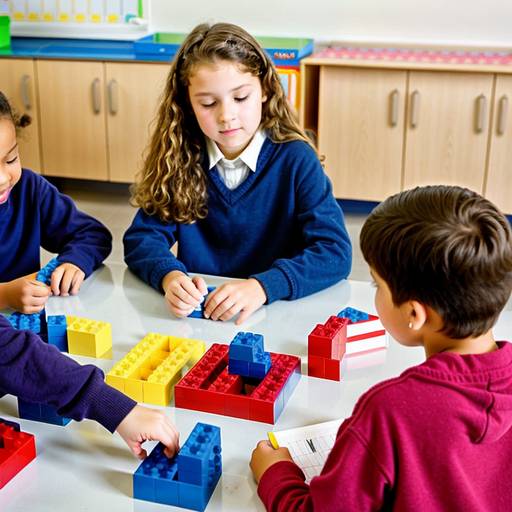
In this 3rd-grade math lesson, students will explore multiplication concepts and patterns through interactive and hands-on activities. The lesson begins by engaging students with skip counting to encourage them to identify patterns related to multiplication. Direct instruction will introduce multiplication as repeated addition, using practical examples to highlight the relationship between multiplication facts and patterns, particularly in the 5s and 10s tables.
Students will then participate in a hands-on activity where they create arrays using manipulatives to visually represent multiplication facts. Small group discussions will follow, allowing students to share their observations about patterns in their products. They will also complete worksheets that challenge them to identify and extend multiplication patterns.
To conclude, the lesson reinforces key takeaways through a brief review and encourages students to share their insights. Assessment will occur through monitoring group activities, evaluating worksheet completion, and reviewing independent practice to ensure understanding. Differentiation strategies will be implemented to support varying learning levels, ensuring all students can engage with the material effectively. By the end of the session, students should demonstrate confidence in recognizing and working with multiplication patterns.
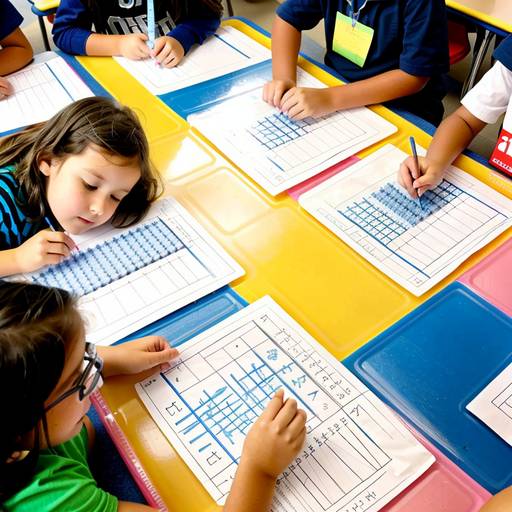
In this 60-minute math lesson for third graders, students will explore the concept of multiplication and identify patterns within multiplication tables. The lesson begins with a discussion to elicit students' prior knowledge of multiplication, which is then connected to the use of a multiplication chart. Through guided practice, students will discover patterns associated with multiplying by 1, 2, 5, and 10.
Next, students will engage in a relay activity where they work in small groups to solve multiplication flashcards, record their answers on colored paper, and discuss any patterns they notice. This collaborative activity fosters teamwork and reinforces their understanding of multiplication concepts.
Following the group activity, students will complete a worksheet that includes various multiplication problems and pattern identification tasks. The lesson concludes with a reflection where students share insights about what they learned, emphasizing the importance of recognizing patterns in multiplication.
Assessment will occur through observation during activities and the review of completed worksheets. Extensions for advanced learners include creating their own multiplication games or puzzles. Overall, the lesson aims to enhance students' comprehension of multiplication and its patterns in an engaging and interactive manner.