
Filters
Level
Grade
Subject
Subject Area
Subject Topic
Standard(s)
Audience
Keyword
DurationMinutes
3rd Grade Patterns Lesson Plans

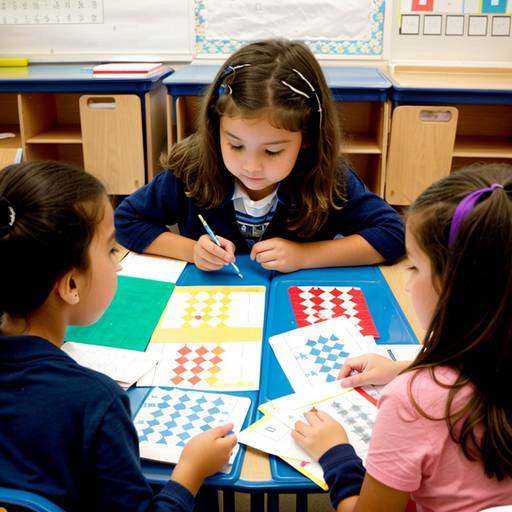
In this engaging 3rd-grade math lesson, students will explore the concept of multiplication as a form of repeated addition. The lesson begins with a discussion to recall prior knowledge, followed by a demonstration using visual aids such as counters to illustrate how multiplication works. Students will then create a multiplication chart on the whiteboard, identifying patterns within the multiplication facts.
During a group activity, students will use pattern blocks or colored paper shapes to create visual representations of multiplication patterns. Each group will present their work, explaining the multiplication reasoning behind their patterns. Independent practice will involve a worksheet featuring multiplication problems and exercises focused on recognizing numerical patterns.
The lesson closes with a class discussion about the real-world applications of patterns in everyday life. Throughout the session, the teacher will monitor understanding and provide feedback, ensuring that all students grasp the concepts of multiplication and pattern recognition effectively. Extensions are included for advanced learners and additional support for those needing more guidance.
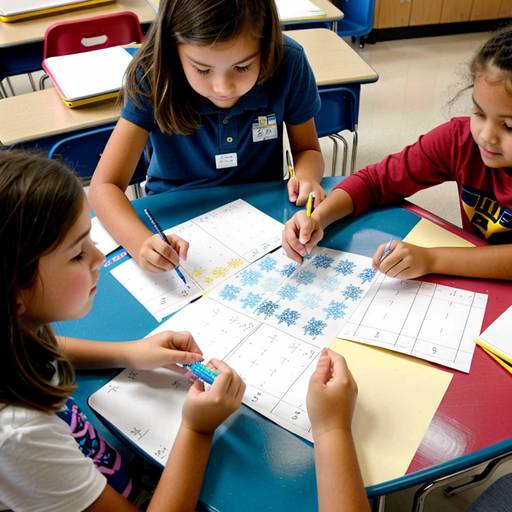
This lesson plan aims to help 3rd-grade students understand multiplication and identify patterns within multiplication tables. The lesson begins with an introduction to multiplication, relating it to addition and highlighting how multiplication functions as a quicker method for adding equal groups.
Students will participate in a guided practice where they collectively fill out part of a multiplication chart on the whiteboard, identifying patterns as they go. Following this, they will work in small groups using pattern blocks or colored counters to create their own multiplication tables, encouraging collaboration and discussion of the patterns they observe.
For independent practice, students will complete worksheets featuring a multiplication chart and exercises focused on recognizing patterns in numbers. The lesson concludes with a review of their discoveries and a discussion on the excitement of uncovering numerical patterns. Assessment will be conducted through observation and evaluation of students' worksheets. Differentiation strategies are in place to support various learning levels, and the lesson includes extensions, such as a multiplication game, to reinforce skills further. Overall, the lesson fosters a fun and interactive environment for enhancing students' multiplication skills and understanding of patterns.