
Filters
Level
Grade
Subject
Subject Area
Subject Topic
Standard(s)
Audience
Keyword
DurationMinutes
3rd Grade Arrays Lesson Plans

This lesson plan focuses on teaching 3rd-grade students the concepts of multiplication and arrays. The objectives include helping students understand multiplication as repeated addition, creating and recognizing arrays as visual representations, and solving simple multiplication problems.
The lesson begins with an engaging question to prompt discussion about multiplication, followed by a definition and explanation of arrays. Students will then work in small groups to create their own arrays using counters for various multiplication problems. After sharing their creations with the class, students will complete a worksheet that requires them to draw and label arrays for specific multiplication problems.
The session concludes with a review of the key concepts and an exit ticket activity, where students write a multiplication problem and draw a corresponding array. Assessment will be based on student participation, the accuracy of their array drawings, and responses to the exit ticket. The lesson incorporates opportunities for differentiation and extensions to accommodate varying student needs and abilities.
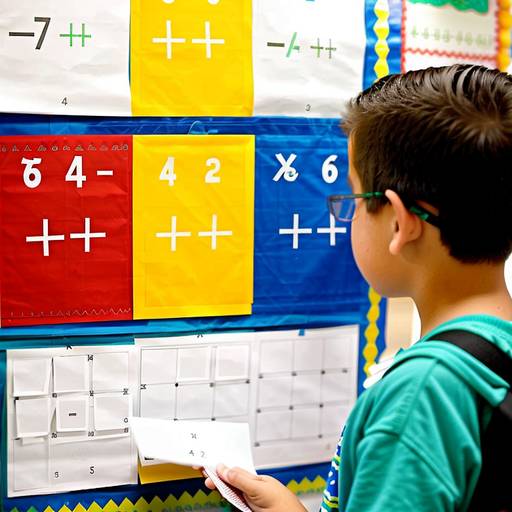
In this 3rd-grade math lesson, students will explore the concept of multiplication through the use of arrays. The session begins with a story highlighting themes of grouping and sharing, which serves as a foundation for understanding how arrays represent multiplication as repeated addition.
During direct instruction, the teacher will demonstrate creating arrays on the whiteboard, showing examples such as 2 x 4 and explaining the connection between arrays and their corresponding multiplication facts. Students will then participate in guided practice by creating their own arrays for specified multiplication problems on a worksheet, reinforcing their understanding of organizing objects in rows and columns.
Once they have had the opportunity to practice, students will independently draw arrays for selected multiplication facts and write the related equations. The lesson closes with students sharing their work with partners and presenting to the class, allowing for discussion and reinforcement of the concepts learned.
Assessment will be based on the accuracy of their worksheets and their engagement in discussions. Additional activities may include solving word problems that involve arrays, offering depth for advanced learners. This engaging lesson reinforces the foundational understanding of multiplication through visual and hands-on learning experiences.
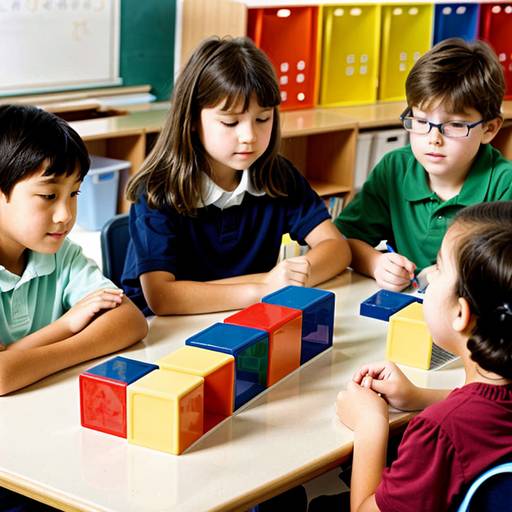
This lesson plan focuses on teaching 3rd-grade students the concept of multiplication through the use of arrays. It begins with an interactive discussion to connect multiplication with repeated addition. The instructor introduces arrays as a visual tool for organizing numbers, demonstrating how to represent multiplication problems using rows and columns. Students then engage in guided practice by creating various arrays with counters, promoting collaboration and understanding through peer discussions. Afterward, they work independently on a worksheet that requires them to draw arrays corresponding to specific multiplication problems. The lesson concludes with students sharing their arrays and the multiplication sentences they represent, reinforcing their understanding of the concept. Assessment is conducted through the review of worksheets and participation, with extensions for advanced learners and modifications for those who need additional support. The approach allows students to visualize multiplication and enhances their problem-solving skills in a hands-on manner.

In this 3rd-grade math lesson plan, students will explore the concept of multiplication through the use of arrays. The lesson begins with an engaging hook that prompts students to think about grouping objects together. Following this, the teacher introduces arrays and key multiplication vocabulary, illustrating how to create and interpret them on a whiteboard.
During guided practice, students will have the opportunity to create their own arrays on graph paper for various multiplication problems, promoting collaboration as they share their work with peers. Independent practice includes completing a worksheet that requires students to draw arrays corresponding to given multiplication facts, and a flashcard game to reinforce their skills in a pair setting.
The lesson concludes with a sharing session, where students reflect on what they’ve learned about arrays and how they relate to multiplication. Assessment will involve observing students' participation and reviewing their worksheets to ensure understanding. Differentiation strategies will be in place to support learners at different levels, while an extension activity offers a chance for students to showcase their work in a classroom gallery. Overall, the lesson aims to foster engagement and hands-on learning in a supportive environment.