
Filters
Level
Grade
Subject
Subject Area
Subject Topic
Standard(s)
Audience
Keyword
DurationMinutes
3rd Grade Lines Lesson Plans

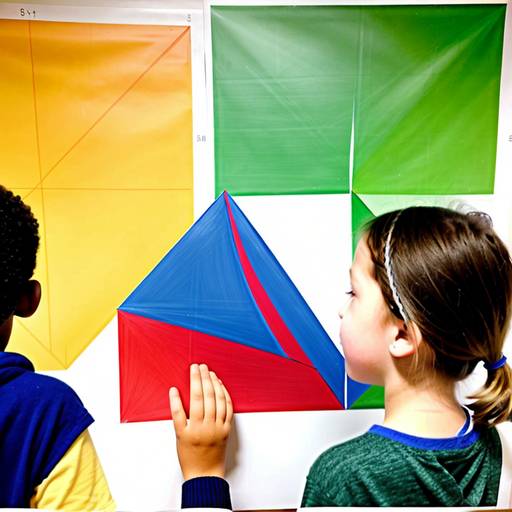
In this engaging 3rd-grade math lesson focused on geometry, students will explore various types of lines, including straight, curved, horizontal, vertical, and diagonal. The lesson begins with a warm-up discussion about lines and their presence in everyday life, followed by a demonstration on how these lines can be combined to form basic geometric shapes such as triangles and rectangles.
Students will participate in a shape hunt around the classroom to identify real-world examples of lines and will practice their skills on worksheets designed to reinforce their understanding. For independent practice, each student will create an art project featuring geometric designs made from different line types, which they will later present to the class.
At the end of the lesson, students will recap what they learned and be assigned a home activity to find and photograph objects showcasing straight or curved lines, encouraging them to apply their knowledge outside the classroom. Assessment will involve observing participation, reviewing worksheets, and evaluating the artwork to ensure comprehension of the key concepts.
In this 3rd-grade math lesson focused on geometry and lines, students will explore fundamental concepts related to lines and shapes. They will learn to identify three types of lines: horizontal, vertical, and diagonal, and understand how these lines contribute to the formation of basic geometric shapes such as triangles, squares, rectangles, and circles.
The lesson begins with a discussion to engage students by identifying lines in their classroom environment. After introducing the types of lines through demonstrations and examples, students participate in guided practice where they explore shapes and categorize the lines that make them up.
During independent practice, students create their own shapes using specified lines, reinforcing their understanding and allowing for creativity. They will then share their creations with the class, explaining the types of lines used. The lesson concludes with an assessment of both the worksheets and the shape creations to evaluate students’ grasp of the material and their ability to apply what they've learned. Extensions are provided for advanced learners to further challenge their understanding of geometry by incorporating angles and complex figures.

In this 3rd-grade math lesson, students will explore the concepts of lines and angles within the context of geometry. The lesson begins with an interactive introduction where students name various shapes and learn about different types of lines, including straight, curved, horizontal, vertical, and diagonal. The teacher will provide direct instruction on these line types and introduce the concept of angles, focusing specifically on identifying right angles.
Following the instructional segment, students will engage in guided practice by working in pairs to complete a worksheet that requires them to identify and label lines. Afterward, they will participate in a hands-on activity, collaborating in small groups to create a large geometric shape using various line types and angles. They will draw and cut out shapes, ensuring to label each line and angle accordingly.
To conclude the lesson, groups will present their geometric designs, sharing insights about the lines and angles used in their creations. Assessment will be based on worksheet correctness and group presentations, ensuring all students understand the different types of lines and their relevance in everyday life. Extensions will be available for advanced learners to further challenge their understanding. Overall, the lesson promotes collaborative learning and creativity while reinforcing foundational geometric concepts.
In this 3rd-grade math lesson, students will explore fundamental concepts of geometry and lines. The lesson aims to help students identify and describe various types of lines, including straight, curved, horizontal, vertical, and diagonal. Students will also recognize and classify basic geometric shapes such as triangles, squares, rectangles, and circles based on their properties.
The lesson begins with a warm-up discussion that connects geometry to real-life examples, followed by guided practice where students will replicate lines on paper and participate in a line hunt around the classroom. They will also engage with flashcards to identify and draw shapes, promoting both visual and kinesthetic learning.
Students will then complete a worksheet that challenges them to draw different types of lines, categorize various shapes, and create their own unique shape using a combination of lines. The class will come together to discuss their findings and share their work, reinforcing the importance of geometry in the world around them.
Finally, students will reflect on their learning through an exit ticket that allows them to demonstrate their understanding of lines and shapes by drawing and connecting their learning to real-life experiences. Assessments will include observation of participation, review of worksheets, and evaluation of exit tickets, ensuring a comprehensive understanding of the material. The lesson is designed to include differentiation strategies to meet the diverse needs of all learners.