
Filters
Level
Grade
Subject
Subject Area
Subject Topic
Standard(s)
Audience
Keyword
DurationMinutes
3rd Grade Comparing Fractions Lesson Plans

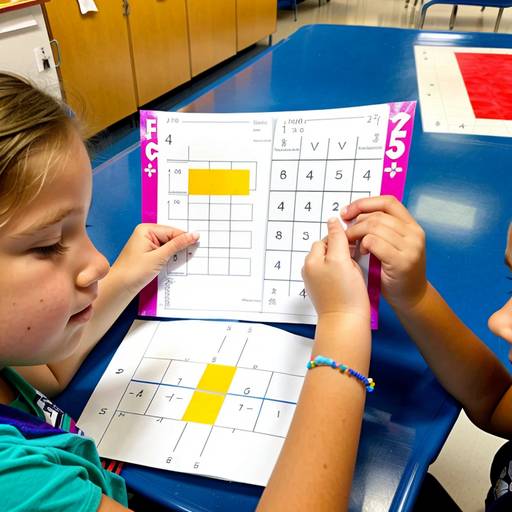
In this 3rd-grade math lesson, students are introduced to the concept of fractions as parts of a whole. The lesson begins with a discussion to connect fractions to real-life examples, such as sharing pizza. Visual aids, including fraction circles and strips, are used to explain how to identify and compare fractions, focusing on both like and unlike denominators.
Students engage in a hands-on activity where they create their own fraction circles using paper plates, allowing them to visualize and compare different fractions with a partner. Independent practice involves completing worksheets that require them to compare fractions and represent them on a number line. The lesson concludes with a review of key concepts and a reflection on what students learned, providing opportunities for both assessment and differentiation based on varying skill levels. Extensions include creating a fraction book and introducing simple word problems that apply their understanding in real-world contexts.
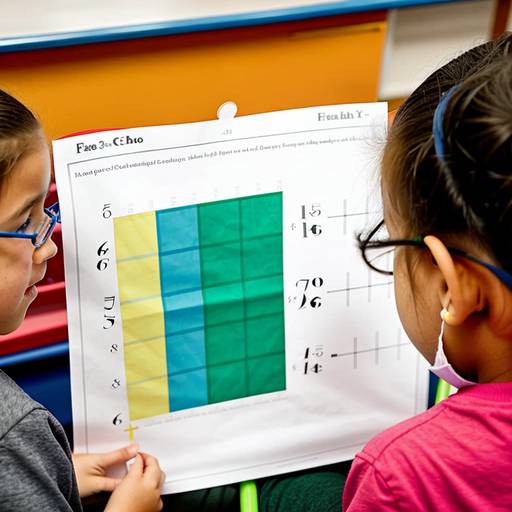
In this 3rd-grade math lesson, students will explore the concept of fractions as parts of a whole and learn to compare simple fractions using visual aids and number lines. The lesson begins with a discussion about fractions, introducing key terms like numerator and denominator. Students will then engage in group activities involving fraction circles, where they will compare different fractions and share observations.
Next, they will interact with a large number line, placing their fraction representations to visualize their relative sizes. A hands-on activity will allow students to create their own “fraction pizzas,” dividing circles into equal parts to represent different fractions before comparing them with a partner.
To conclude the lesson, there will be a recap of the main concepts learned, followed by a worksheet to reinforce their understanding. Assessment will occur through observations during group discussions and the evaluation of completed worksheets, ensuring that all students grasp the material. The lesson will offer differentiation strategies to accommodate varying learning needs and suggest extensions like exploring equivalent fractions and practical applications in cooking. This engaging approach aims to foster a solid understanding of comparing fractions in a fun and interactive manner.
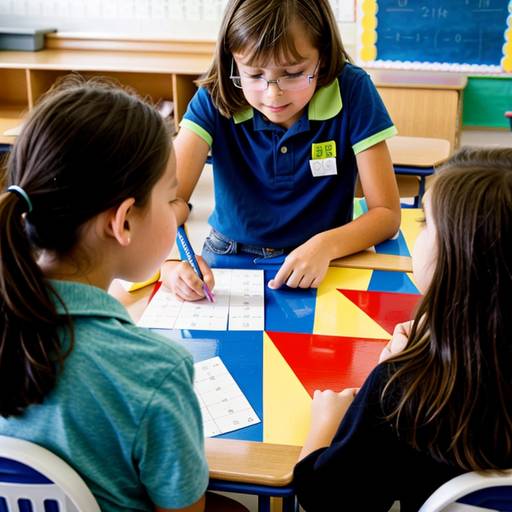
This 1-hour lesson for 3rd-grade students focuses on the concept of fractions and how to compare them. The lesson begins with an interactive game using visuals of food items to engage students and introduce the idea of fractions. Direct instruction follows, where students learn about the parts of a fraction and how to compare fractions with like and unlike denominators using fraction circles or bars for visual support.
During guided practice, students participate in a "Fraction Wall" activity, creating and ordering fraction cutouts on chart paper to enhance their understanding. They also complete worksheets with fraction comparison problems, allowing for further practice with teacher assistance. Independent practice includes a worksheet for comparative fraction problems and an optional matching game for equivalent fractions.
The lesson concludes with a review discussion, where students share what they've learned and complete an exit ticket that assesses their understanding of fractions and comparisons. Differentiation strategies are provided for advanced students and those needing additional support. Overall, this lesson cultivates students' understanding of fractions through interactive and visual methods, ensuring engagement and comprehension.