
Filters
Level
Grade
Subject
Subject Area
Subject Topic
Standard(s)
Audience
Keyword
DurationMinutes
3rd Grade Addition Lesson Plans


In this 3rd-grade math lesson, students will focus on understanding and solving word problems involving addition. The lesson begins with a warm-up activity that reviews basic addition facts using flashcards. The teacher will then model how to break down a sample word problem step-by-step, identifying key numbers, determining the operation needed, and visualizing the problem with counters.
Following the demonstration, students will participate in a group activity where they work in pairs to solve word problems together, reinforcing collaboration and problem-solving skills. They will then complete a worksheet with various addition word problems independently.
At the end of the lesson, there will be a class discussion where students share their solutions, enhancing their understanding through peer learning. An exit ticket will prompt students to reflect on what they learned during the lesson. Throughout the lesson, opportunities for differentiation will be provided to cater to varying student needs, ensuring all students can actively participate and succeed in solving addition word problems.

This comprehensive lesson plan for 3rd-grade mathematics focuses on teaching students the concept of addition and regrouping. The lesson begins with a warm-up activity to review basic addition facts and introduces the concept of regrouping through engaging questioning. Direct instruction utilizes visual aids such as base ten blocks and place value charts to illustrate how regrouping works, specifically through an example problem.
During guided practice, students collaborate in pairs to solve addition problems that incorporate regrouping, with ample teacher support available. Following this, students engage in independent practice by completing worksheets that include both standard addition problems and real-world word problems designed to apply the regrouping concept.
The lesson concludes with a review of key concepts, allowing students to reflect on what they learned and submit exit tickets highlighting one new concept and one lingering question. Throughout the lesson, the assessment methods include observation during group work, grading of independent worksheets, and analysis of exit tickets to gauge understanding and identify areas for further support. Overall, this lesson aims to foster confidence and competence in addition with regrouping in a supportive learning environment.

In this 60-minute lesson, 3rd-grade students will explore the concept of addition and regrouping through engaging activities and hands-on practice. The lesson begins with a relatable scenario to capture students' attention and introduce the need for addition.
The teacher will model the process of addition on the whiteboard, focusing specifically on regrouping when the sum exceeds ten. Students will use place value charts and base-ten blocks for a visual demonstration of the concepts. After direct instruction, students will work in pairs to solve a series of addition problems, using manipulatives to reinforce their understanding of regrouping.
Following guided practice, students will complete a worksheet featuring a mix of addition problems, including those that require regrouping. They will also participate in a fun relay game, solving addition problems from cards for extra practice and a competitive element.
The lesson will conclude with a review of key concepts, and students will complete an exit ticket to assess their understanding. Throughout the lesson, the teacher will monitor progress, providing support as needed and adjusting future instruction based on student performance and comprehension. Adaptations will be made for advanced learners and those needing additional assistance to ensure everyone can grasp the concepts effectively.

In this 3rd-grade math lesson, students will explore the concept of addition with regrouping. The objective is for them to grasp the regrouping process through hands-on activities and direct instruction. The lesson begins with an engaging introduction, where students relate addition to their personal experiences. A demonstration using base ten blocks will illustrate the regrouping method with a two-digit addition problem, allowing students to visualize the concept.
Following the demonstration, students will participate in a guided group activity where they will work together to solve addition problems while utilizing manipulatives. This collaborative practice encourages discussion and reinforces understanding. After that, students will complete a worksheet independently, applying the regrouping strategy to various addition problems.
The lesson concludes with a review of the concepts covered, where students will share their strategies and clarify their understanding. As an exit ticket, they will write down their own addition problem with regrouping to reinforce learning. Assessment will be based on participation during activities, worksheet accuracy, and exit ticket responses. Differentiation strategies will be employed to support both struggling and advanced learners, while extensions may include technology tools or a math scavenger hunt to further engage students. Overall, the lesson aims to build students' confidence in addition through interactive and practical learning experiences.

In this 3rd-grade math lesson, students will explore the concept of addition through the lens of word problems. The lesson begins with a storytelling hook that introduces the theme of exploration and problem-solving. Students will learn to identify key components in word problems, such as important numbers and keywords that indicate addition. Through modeling, they will practice breaking down sample problems and setting up number sentences.
Following direct instruction, students will engage in guided group activities, where they will work collaboratively to solve different addition word problems, discuss their solutions, and present their methods to the class. This encourages teamwork and allows them to learn from each other.
For independent practice, students will complete a worksheet with a variety of addition word problems, reinforcing their understanding through individual work. The lesson concludes with a reflection where students share their experiences and favorite problems, promoting a deeper engagement with the material.
Throughout the lesson, assessment will be based on worksheet answers and group discussions, guiding further instruction as necessary. Extension activities will challenge students to create their own word problems, fostering creativity and consolidation of their understanding of addition.
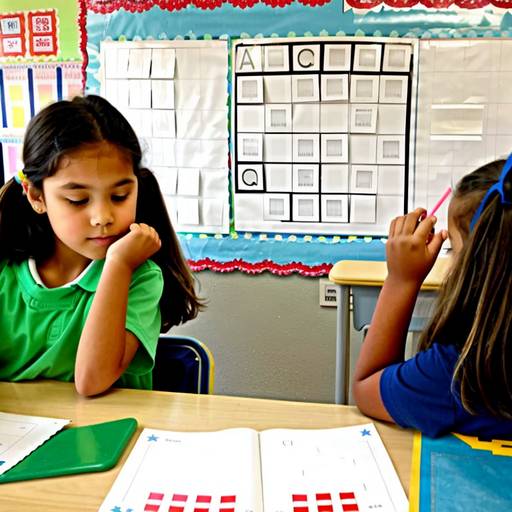
In this 3rd-grade math lesson, students will explore addition through engaging word problems. The lesson begins with a discussion that connects addition to real-life scenarios, followed by an introduction to keywords that signify addition. The teacher will model several word problems, demonstrating how to identify relevant numbers, select the proper operation, and articulate complete answers.
Students will then work in small groups to tackle a series of addition word problems contained in "Mystery Bags." This collaboration will foster discussion and promote teamwork as they create charts outlining their problem-solving steps. Following the group activity, students will complete a worksheet featuring additional word problems independently and have the opportunity to formulate their own original word problems based on personal interests.
The lesson concludes with a sharing session where students present their work, celebrating their successes with "Math Detective" badges. Assessment will focus on observing group interactions, evaluating worksheet completion, and reviewing student-generated problems for clarity and understanding. Overall, this lesson aims to foster a fun and interactive math environment while enhancing students' problem-solving skills.
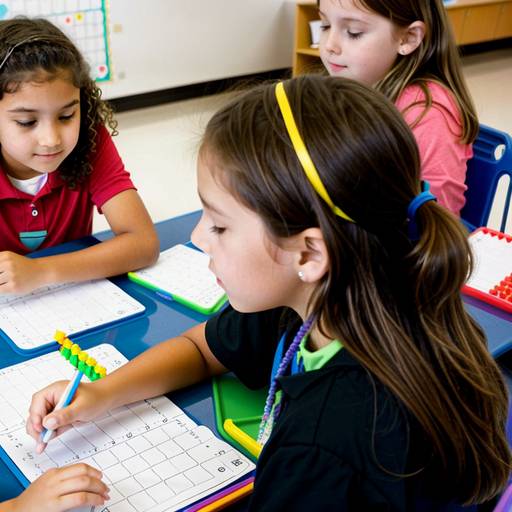
This lesson focuses on helping 3rd-grade students understand and solve addition word problems. The session begins with a review of basic addition concepts and progresses to the identification and breakdown of word problems. Students learn to extract key information, formulate equations, and apply various strategies to find solutions, such as drawing pictures and using manipulatives.
Through guided group activities, students collaborate to solve word problems and share their findings with the class. They then engage in independent practice by completing worksheets featuring a variety of word problems. The lesson concludes with a review of key concepts and an exit ticket exercise where students create their own word problems for peers to solve. Differentiation strategies are included to support learners of varying abilities, ensuring all students have the opportunity to develop their addition and problem-solving skills effectively. Ongoing assessment occurs through observation, worksheet completion, and exit ticket responses.
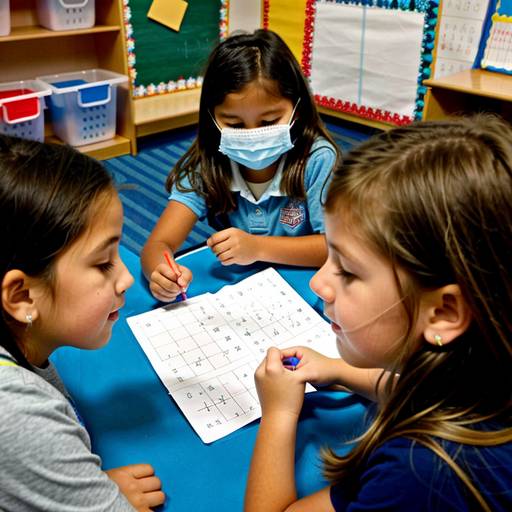
The lesson focuses on teaching 3rd-grade students the concept of addition with regrouping. It begins with an engaging discussion to introduce the idea of carrying over when adding larger numbers. The instructor demonstrates the process using an example on the whiteboard, emphasizing the steps involved in regrouping and utilizing base ten blocks for better visualization.
Students then work in pairs to practice similar addition problems, with guidance provided as needed. Following collaborative practice, each student completes an independent worksheet to reinforce their understanding of regrouping.
The lesson concludes with a reflective sharing session, wherein students express what they learned about the topic. An engaging game is introduced to allow students to further apply their skills in a fun and competitive manner. Assessment throughout the lesson involves monitoring participation, collecting worksheets for review, and evaluating student comprehension through sharing sessions. Accommodations for varying learning needs are included, ensuring all students can successfully engage with the material.