
Filters
Level
Grade
Subject
Subject Area
Subject Topic
Standard(s)
Audience
Keyword
DurationMinutes
3rd Grade Sentence Structure Lesson Plans

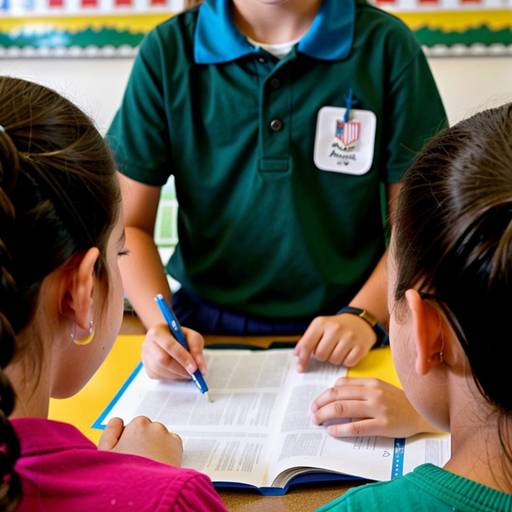
In this 3rd-grade Language Arts lesson, students will explore basic grammar concepts focusing on sentence structure. The lesson begins with a captivating read-aloud that introduces the importance of complete sentences in communication. Students will learn to identify subjects and predicates, understanding what constitutes a complete sentence, and the role of punctuation.
Through interactive discussions and guided activities, students will sort sentences and fragments, followed by an independent practice where they create their own complete sentences using provided subjects and predicates. The lesson closes with a sharing session, allowing students to present their work and reflect on the importance of using complete sentences. Assessment will be based on participation during activities and the accuracy of students' worksheets, with optional extended activities to reinforce learning further.

In this 3rd-grade language arts lesson, students will engage in exploring the fundamental components of sentences, focusing on subjects and predicates. The lesson begins with a discussion to clarify what constitutes a complete sentence, followed by guided practice where students work in small groups to create simple sentences using provided building blocks. Each group will share their sentences, promoting collaboration and class discussion.
For independent practice, students will assemble their own sentences on strips of paper, incorporating subjects, predicates, and conjunctions to form both simple and compound sentences. They will also illustrate their sentences, integrating creativity into their writing.
The lesson concludes with a peer review activity where students exchange their sentence strips and provide constructive feedback based on clarity and structure. This approach facilitates understanding of sentence construction while fostering teamwork and critical thinking skills. Assessment will be based on group participation, sentence construction, and the quality of peer feedback. This interactive lesson aims to reinforce grammar knowledge and enhance students' writing skills.

This 3rd-grade Language Arts lesson focuses on teaching students about the components of complete sentences, specifically subjects and predicates. The lesson begins with a discussion that encourages students to define and understand these terms. Students participate in a collaborative activity where they rearrange scrambled sentence cards to form complete sentences and identify their subjects and predicates. Following this, they create their own sentences using a worksheet, where they select a subject and construct a corresponding predicate, and illustrate their sentences. The lesson concludes with a class discussion to reinforce concepts learned, and student understanding is assessed through their participation in activities and completion of the worksheets. Differentiation strategies are included to support diverse learners, and an extension activity encourages students to apply their knowledge in a creative homework assignment.

In this 3rd grade Language Arts lesson, students will focus on identifying and constructing complete sentences through an engaging and interactive approach. The lesson starts with a brief introduction to the components of a sentence—subjects and predicates—using relatable examples to make the concepts clear. After modeling sentence breakdowns and practicing together, students will work in small groups to create their own sentences by matching subject and predicate flashcards.
Following the group activity, students will complete a worksheet that reinforces their understanding by having them identify the subject and predicate in given sentences and compose their own. The lesson concludes with a review of key concepts and an exit ticket, where students share their favorite food in a complete sentence. This comprehensive approach ensures students grasp fundamental grammar skills while fostering creativity and collaboration in their learning. Assessments will include observation during group work, worksheet analysis, and exit ticket responses, with opportunities for differentiation and extensions provided to meet diverse student needs.