
Filters
Level
Grade
Subject
Subject Area
Subject Topic
Standard(s)
Audience
Keyword
DurationMinutes
3rd Grade Grammar Lesson Plans

In this 3rd-grade Language Arts lesson, students will explore basic grammar concepts focusing on sentence structure. The lesson begins with a captivating read-aloud that introduces the importance of complete sentences in communication. Students will learn to identify subjects and predicates, understanding what constitutes a complete sentence, and the role of punctuation.
Through interactive discussions and guided activities, students will sort sentences and fragments, followed by an independent practice where they create their own complete sentences using provided subjects and predicates. The lesson closes with a sharing session, allowing students to present their work and reflect on the importance of using complete sentences. Assessment will be based on participation during activities and the accuracy of students' worksheets, with optional extended activities to reinforce learning further.

This 3rd-grade language arts lesson plan focuses on teaching students the rules of capitalization and how to apply them in their writing. The lesson begins with an engaging discussion about capital cities, emphasizing the importance of proper nouns. Students are introduced to key capitalization rules through direct instruction, utilizing a poster as a visual aid.
During guided practice, students work on a worksheet with sentences missing capital letters, collaborating to identify which words need capitalization. They then independently write a short paragraph about their favorite city, applying the capitalization rules learned. The lesson concludes with students sharing their paragraphs and reinforcing the rules through a chant or song. Assessment is based on their worksheets and paragraphs, with differentiation strategies in place for varying skill levels. An extension activity involves creating a "Capital City" bulletin board for ongoing practice and engagement. Overall, the lesson aims to enhance students' understanding and application of capitalization in their writing.
This 3rd-grade language arts lesson focuses on teaching students the essential rules of capitalization in writing. The lesson begins with a brief discussion about the importance of capitalization, followed by direct instruction where students analyze sentences with capitalization errors. During guided practice, they work on correcting capitalization mistakes in provided worksheets. Students then engage in a creative activity where they write and illustrate their own sentences using proper capitalization. The lesson concludes with a class share, where students present their work, reinforce their understanding, and review the capitalization rules. Assessment is based on participation and completion of worksheets, with differentiation strategies in place to support various learning needs. Overall, the lesson aims to enhance students' grammar skills and confidence in writing through interactive and engaging activities.
In this 3rd-grade Language Arts lesson, students will focus on the rules of capitalization, learning to identify and correctly capitalize proper nouns and the beginnings of sentences. The lesson begins with a discussion on the importance of capitalization, followed by hands-on practice where pairs of students work together to correct improperly capitalized sentences. To reinforce their skills, students participate in an engaging treasure hunt, where they find clues containing sentences that need capitalization corrections. After completing the treasure hunt, each student writes a creative story or paragraph incorporating proper capitalization. The lesson concludes with a sharing session, allowing students to showcase their work and reinforcing the significance of clear communication through correct capitalization. Assessment is based on participation and the accuracy of students’ written work, with opportunities for extensions for advanced learners. Overall, the lesson combines exploration and collaboration to enhance students' grammar skills in a fun and interactive manner.
This 3rd-grade language arts lesson focuses on teaching students the rules of capitalization in grammar. The class lasts 60 minutes and begins with an engaging song to capture the students' interest and initiate discussion about capitalization. The teacher then presents key capitalization rules, including the importance of capitalizing the first letter of sentences, proper nouns (names, places, and titles), and other relevant terms.
Students participate in a guided practice activity where they work together to identify and correct capitalization errors in sample sentences on the whiteboard. Following this, they complete a worksheet individually, rewriting a paragraph to incorporate the correct capitalization.
At the end of the lesson, students reflect on what they’ve learned by sharing their corrected sentences with the class. Assessment includes reviewing the completed worksheets for capitalization accuracy and the level of participation during discussions. Differentiation strategies and extension activities are provided to cater to diverse learning needs. Homework consists of writing a short paragraph about a favorite place or person, applying capitalization rules correctly. Overall, the lesson aims to enhance students' understanding of grammar and proper writing conventions in an interactive manner.

In this lesson plan for 3rd-grade language arts, students will explore the essential role of punctuation in writing. The lesson begins with an engaging introduction that highlights why punctuation is important and how it influences the meaning of sentences. Following a guided demonstration, students will work in pairs to identify and apply various punctuation marks—periods, commas, question marks, and exclamation points—on worksheets designed to help them practice.
For independent practice, students will select sentences from short stories and rewrite them with the correct punctuation, allowing them to express their creativity. The class will then share their punctuated sentences, fostering discussion about their choices. The lesson concludes with a recap of key points, where students reflect on their learning about punctuation, leading to the distribution of rewards for participation and achievement throughout the session. Assessment will be based on observation during activities and the completed worksheets to evaluate students’ understanding of punctuation. Modifications are included to support learners of varying levels. Overall, the lesson aims to make grammar and punctuation engaging and accessible.

This 3rd-grade Language Arts lesson focuses on teaching students the importance and usage of various punctuation marks, such as periods, exclamation points, question marks, and commas. The lesson begins with a discussion about the significance of punctuation in writing, followed by direct instruction where students collaboratively fill in sentences with the correct punctuation on the whiteboard.
Next, students work in pairs to complete a worksheet that reinforces their understanding, then they individually punctuate another set of sentences. A group activity allows students to create “Punctuation Rules” posters, demonstrating their understanding through creative examples. The lesson concludes with group presentations and a recap of the key concepts learned. Assessment includes observation of participation, review of worksheets, and evaluation of the group posters. The lesson incorporates differentiation and extensions to meet varying student needs and encourage engagement with punctuation in their reading and writing.
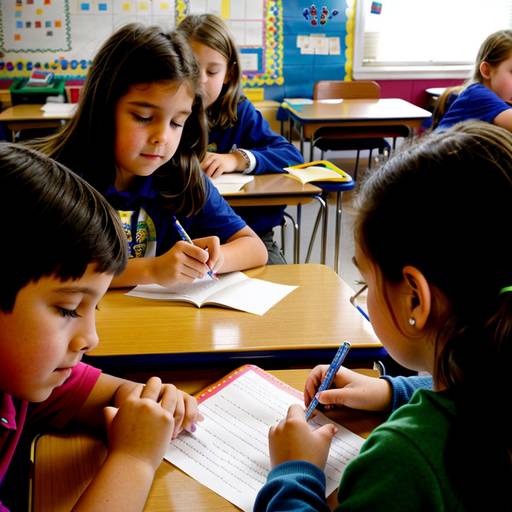
In this 3rd-grade Language Arts lesson, students will learn about important punctuation marks, including periods, commas, question marks, and exclamation points. The lesson begins with a discussion about the significance of punctuation in writing and how it affects clarity and expression. Students will receive Punctuation Toolkits that provide visual aids and explanations of each mark, which they will review as a class.
Next, in pairs, students will engage in a hands-on activity using worksheets to identify and correct punctuation errors in various sentences. They will then create their own sentences incorporating the targeted punctuation marks and have the opportunity to share their work with peers.
The lesson concludes with a recap of the importance of punctuation, rewarding students for their efforts with stickers. Assessment will be based on their completed worksheets, participation in discussions, and the sentences they create. Modifications are provided for students needing additional support, and extensions include a scavenger hunt for punctuation in books.

In this 60-minute language arts lesson for 3rd graders, students will explore the importance and application of essential punctuation marks, namely periods, question marks, and exclamation points. The lesson begins with a class discussion to introduce these punctuation marks, followed by direct instruction where students examine sentences lacking punctuation and learn how punctuation alters meaning.
During guided practice, students work on worksheets to identify and correct punctuation errors in sentences, collaborating in pairs to enhance their understanding. Independent practice involves creating short stories that incorporate various punctuation marks, allowing for creativity and personal expression.
The lesson concludes with a sharing session where students can present their work, followed by the distribution of participation certificates. Assessment will be based on classroom participation, worksheet accuracy, and the proper use of punctuation in their stories. Extensions and modifications are provided to accommodate diverse learning needs.

In this 3rd-grade language arts lesson, students will engage in exploring the fundamental components of sentences, focusing on subjects and predicates. The lesson begins with a discussion to clarify what constitutes a complete sentence, followed by guided practice where students work in small groups to create simple sentences using provided building blocks. Each group will share their sentences, promoting collaboration and class discussion.
For independent practice, students will assemble their own sentences on strips of paper, incorporating subjects, predicates, and conjunctions to form both simple and compound sentences. They will also illustrate their sentences, integrating creativity into their writing.
The lesson concludes with a peer review activity where students exchange their sentence strips and provide constructive feedback based on clarity and structure. This approach facilitates understanding of sentence construction while fostering teamwork and critical thinking skills. Assessment will be based on group participation, sentence construction, and the quality of peer feedback. This interactive lesson aims to reinforce grammar knowledge and enhance students' writing skills.