
Filters
Level
Grade
Subject
Subject Area
Subject Topic
Standard(s)
Audience
Keyword
DurationMinutes
2nd Grade Matter Lesson Plans


In this 60-minute lesson for 2nd graders, students will explore the concept of matter and its different states: solids, liquids, and gases. The lesson begins with a discussion to define matter and its characteristics, encouraging students to share examples from their experiences. They will then work in small groups to classify various objects provided, allowing them to engage in hands-on activities involving water to observe the properties of liquids.
Following that, the teacher will demonstrate how matter can change states using ice melting into water and boiling water producing steam. This visual and interactive approach helps solidify students' understanding of matter. In the final part of the lesson, students will create simple models of matter using Popsicle sticks, representing a solid, liquid, or gas, and share their creations with the class.
To assess understanding, students will complete an exit ticket that includes drawing examples of each state of matter and writing a brief description of what matter is. The lesson emphasizes exploration, observation, and group collaboration, while providing opportunities for differentiation to cater to varying learning needs. As an extension, students can conduct a simple home experiment to observe changes in matter, fostering a connection between classroom learning and real-world applications.

This 2nd grade science lesson focuses on the fundamental concept of matter, exploring its three states: solid, liquid, and gas. Students will engage in discussions to define and identify these states using everyday examples. Through a hands-on experiment, they will observe the melting of ice to understand state changes and the properties of each state. In small groups, students will document their findings through drawings and shared observations. The lesson concludes with a review of concepts and an exit ticket activity to assess understanding. This interactive approach fosters inquiry and collaboration while engaging students in the fascinating world of physical science.

This lesson focuses on introducing 2nd-grade students to the concept of matter, specifically the three states: solid, liquid, and gas. Students will begin by defining matter and discussing its characteristics through a combination of direct instruction and visual aids. The lesson includes engaging demonstrations using ice, water, and air to illustrate the properties of each state.
In guided practice, students will classify various everyday objects as solids, liquids, or gases in small groups, fostering collaborative learning. The hands-on activity involves observing the melting of ice and the evaporation of water to illustrate state changes. Throughout the lesson, students will share their observations and engage in discussions to reinforce their understanding.
To assess learning, participation will be monitored, worksheets will be reviewed, and an informal quiz will help gauge comprehension. Extensions encourage students to explore real-life matter examples at home. Accommodations will be provided to ensure all students can engage effectively with the material. Overall, the lesson aims to make the concept of matter visually and practically accessible to young learners.
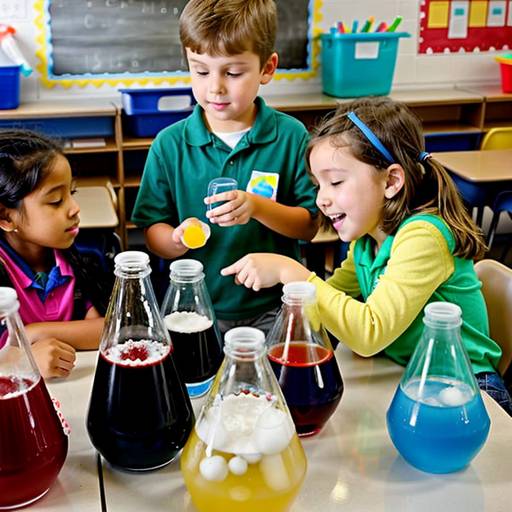
This lesson plan for 2nd-grade students focuses on the concept of matter, specifically exploring the three states: solids, liquids, and gases. The lesson begins with an engaging discussion where students share their favorite drinks, linking their experiences to the states of matter. Through direct instruction, students learn simple definitions and characteristics of solids, liquids, and gases, supported by visual aids.
Students then participate in hands-on experiments at designated stations, where they examine ice cubes, pour water into cups, and explore the properties of air in an inflated balloon. After rotating through the stations, the class comes together for a discussion to share their observations and consider how temperature can affect the states of matter.
The lesson concludes with a review of key concepts and an exit ticket activity where students draw and describe their favorite state of matter. Assessment is based on participation in discussions and experiments, as well as the reflections expressed in their exit tickets. Extension activities encourage students to connect what they’ve learned to their home environment. Overall, the lesson combines exploration, critical thinking, and creativity to foster a foundational understanding of matter.