
Filters
Level
Grade
Subject
Subject Area
Subject Topic
Standard(s)
Audience
Keyword
DurationMinutes
2nd Grade Weather Lesson Plans


In this 2nd-grade Earth Science lesson, students will explore different types of weather, including sunny, cloudy, rainy, snowy, and windy conditions. The objective is to help students identify various weather types and understand how weather affects their daily lives. The lesson begins with a discussion about personal weather experiences and continues with an introduction to simple weather instruments such as thermometers, rain gauges, and anemometers.
Students will engage in group activities to sort weather images and share their findings with the class. They will then work independently on a weather journal, illustrating their favorite type of weather and writing about it. The lesson concludes with a class discussion that reinforces the key concepts learned. Assessment will occur through participation in discussions and reviewing the weather journals. Extensions include creating a class mural and conducting outdoor weather observations. The lesson is designed to be interactive, supporting various learning styles and encouraging creativity while fostering an understanding of Earth Science and weather patterns.
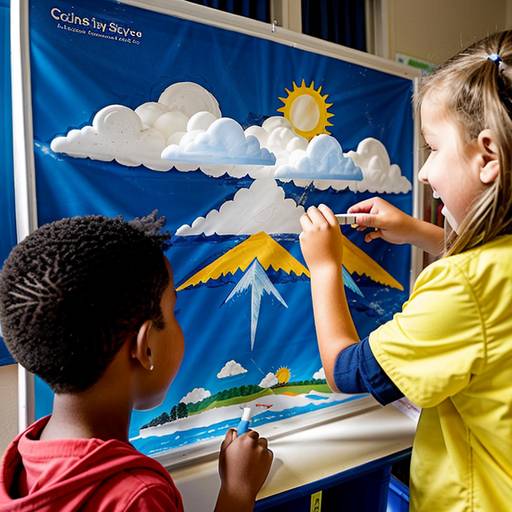
In this 1-hour Earth Science lesson for 2nd graders, students will explore different types of weather and learn about weather patterns. The lesson begins with a short video showcasing various weather conditions, which sparks a discussion about students' personal experiences with weather. Next, students will engage in an interactive activity where they identify weather types using picture cards and contribute to a collective weather chart.
Through a game where they act out different weather types, students gain a deeper understanding of each condition. The lesson then shifts focus to tracking weather patterns using a Weather Diary, which students will maintain at home over the week. To reinforce their learning, students will create their own artistic interpretations of different weather scenes, sharing them with their classmates. The lesson culminates with a recap of key concepts, preparing students to observe and document weather in their daily lives. Assessment will be based on student participation and the accuracy of their Weather Diary entries. Additionally, opportunities for extensions, such as studying local climate patterns or inviting a meteorologist to speak, are included to enhance learning.