
Filters
Level
Grade
Subject
Subject Area
Subject Topic
Standard(s)
Audience
Keyword
DurationMinutes
2nd Grade Solar System Lesson Plans

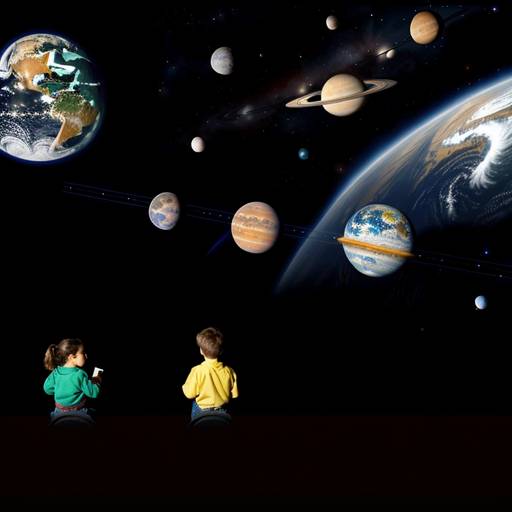
In this 2nd-grade science lesson, students will embark on an exploration of the solar system, focusing on the sun and its eight planets. The lesson begins with an engaging discussion to activate prior knowledge, followed by a presentation featuring vibrant images and videos that illustrate key concepts about each planet's characteristics.
Students will then participate in a hands-on craft activity, where they will create their own models of a chosen planet and share interesting facts with their peers. To reinforce learning and retention, a fun song or dance related to the order of the planets will be introduced, allowing students to engage physically while solidifying their understanding.
The lesson concludes with a brief review and a worksheet for students to complete at home, assessing their comprehension of the material. Throughout the lesson, teachers will observe student participation, ensuring an interactive and supportive environment that caters to diverse learning needs. The lesson also includes suggested extensions for further exploration of astronomy.
This 2nd-grade science lesson plan focuses on introducing students to the solar system and its key components, including the Sun, planets, moons, asteroids, and comets. The lesson begins with a discussion about space followed by a short video to engage students. Direct instruction involves presenting a visual model of the solar system and highlighting unique features of each planet using fact cards.
Students then participate in a creative activity where they design their own planet, encouraging imagination and personal expression. The lesson concludes with a recap of the solar system’s components and a brief sharing session where students present their creations. Assessment is based on participation and a quick quiz to check understanding. Differentiation strategies are included to support various learning needs, and homework encourages students to observe the night sky and reflect on their observations. Overall, the lesson aims to foster curiosity about astronomy and enhance students’ knowledge of space concepts.
In this 2nd-grade science lesson plan, students will explore the solar system by learning about the eight planets, the sun, and the moon. The lesson begins with an engaging discussion about space, followed by a read-aloud of a space-themed book that introduces key concepts. Students will work in small groups to gather and share facts about their assigned planet, promoting collaboration and teamwork.
For a hands-on activity, they will create models of planets using Styrofoam balls or clay, allowing them to apply their knowledge creatively. Once the models are complete, students will present their planet and share one interesting fact with the class. The lesson concludes with a reflection on what students enjoyed and found surprising, reinforcing their learning experience. The plan includes differentiation strategies to accommodate various learning needs and offers extension ideas for further exploration of space. Overall, the lesson aims to foster curiosity about astronomy and help students understand the components and significance of our solar system.
In this 2nd-grade science lesson, students will explore the solar system and its planets. The lesson begins with an engaging discussion about space, followed by a video or slideshow to introduce the solar system's components. Students will learn to identify each of the eight planets and remember their order from the sun using a mnemonic device.
After gathering information about the planets through fact cards, students will participate in a hands-on activity where they will create model planets using Styrofoam balls and decorate them based on their unique characteristics. They will then work as a team to arrange their models on a large poster board in the correct order.
To reinforce their learning, students will complete a "Planet Hunt" worksheet where they fill in the blanks based on clues about each planet. The lesson concludes with a review, encouraging students to share interesting facts they learned and to observe the night sky at home.
Assessment will be based on participation, the quality of their planet models, and the completion of the worksheet, while extension activities will be provided for those finishing early. Overall, the lesson aims to foster curiosity about astronomy and enhance students’ understanding of the solar system in an interactive way.