
Filters
Level
Grade
Subject
Subject Area
Subject Topic
Standard(s)
Audience
Keyword
DurationMinutes
2nd Grade Flexibility Lesson Plans

In this 2nd-grade physical education lesson, students will explore the importance of fitness and flexibility through engaging activities and stretches. The lesson begins with a group circle discussion to introduce the concepts, followed by a dynamic warm-up to prepare their bodies. Students then rotate through three activity stations: a stretching station where they learn static stretches, a fitness challenge station with a mini obstacle course that incorporates various movements, and a cool-down and breathing station focused on relaxation techniques.
After completing the activities, the class reconvenes to discuss their experiences and reflect on what they learned. The lesson concludes with a calming stretching routine to relax their muscles. Assessment involves observing student participation and understanding through discussion, and students are encouraged to continue practicing stretching at home. The overall goal is to foster an appreciation for active living and the benefits of flexibility, promoting lifelong healthy habits.
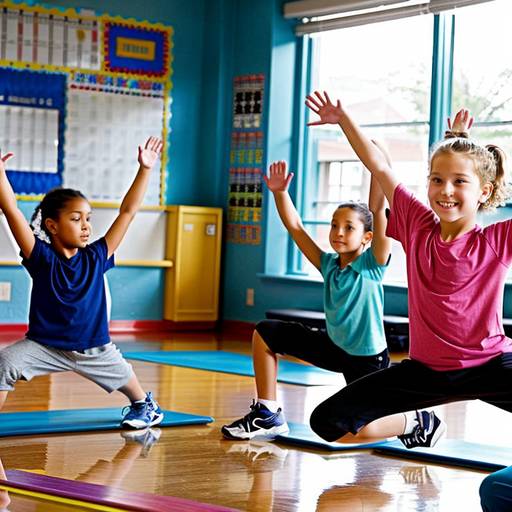
This lesson plan for 2nd-grade physical education focuses on promoting fitness and flexibility among students through engaging activities and discussions. The session begins with a brief introduction about the importance of fitness and flexibility, followed by dynamic warm-up exercises that prepare students for movement.
Students participate in four activity stations, each designed to enhance their flexibility and physical fitness. The stations include stretching exercises, hula hoop challenges to improve balance and core strength, jump rope practices for coordination, and an obstacle course featuring rolling and weaving elements. After the activities, students cool down with gentle static stretches while practicing deep breathing.
To conclude the lesson, students reflect on their experiences, sharing what they enjoyed and lessons learned about staying active and practicing flexibility. Assessment is based on observation during activities and student participation, and modifications are available for those with mobility challenges. Additionally, an extension activity encourages students to engage in flexibility practices at home and share their experiences with the class. Overall, the lesson aims to foster a joyful and understanding approach to fitness and flexibility in young learners.