
Filters
Level
Grade
Subject
Subject Area
Subject Topic
Standard(s)
Audience
Keyword
DurationMinutes
2nd Grade Using Manipulatives Lesson Plans


This 2nd grade mathematics lesson focuses on teaching students the concept of addition through the use of manipulatives. The lesson begins with a warm-up activity that reviews basic addition concepts and introduces colored counting blocks as tools for visualization. Direct instruction follows, where the teacher models addition problems using manipulatives, guiding students through examples on the whiteboard.
In small groups, students collaborate to solve addition problems with their manipulatives, enhancing their understanding through discussion and teamwork. After group work, students engage in independent practice using worksheets to solidify their skills. The lesson concludes with a class discussion where students reflect on their learning experiences and share their strategies. Assessment is accomplished through worksheet review and observation during activities. Extensions are provided for students ready for more challenging concepts, ensuring a comprehensive understanding of addition. Overall, this lesson promotes an engaging and interactive approach to mastering addition skills.
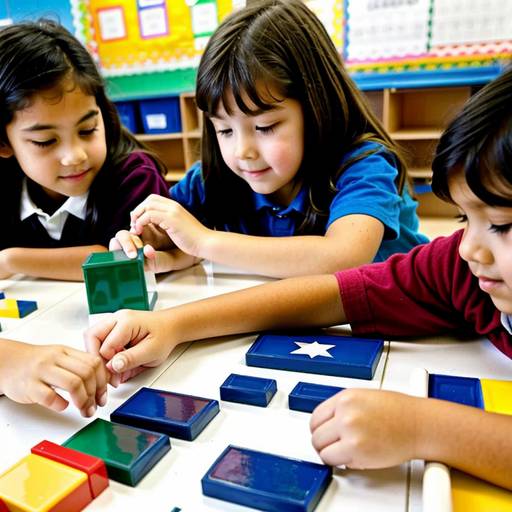
In this 2nd-grade math lesson, students will explore the concept of addition using hands-on manipulatives. The lesson begins with a review of addition basics, followed by a guided practice session where students work in groups to model addition problems using counting blocks. They will then participate in a series of “Addition Stations,” where they will solve different addition problems using manipulatives such as ten frames, number lines, and counting blocks. Each group will rotate through the stations, enhancing their understanding through interactive experiences. The lesson concludes with a discussion where students share their solutions and reflect on how manipulatives helped them grasp addition concepts. Assessment will be conducted through observation and completed worksheets, and accommodations will be provided for diverse learners. Extensions may include addition games and more advanced problems for those ready to challenge themselves.
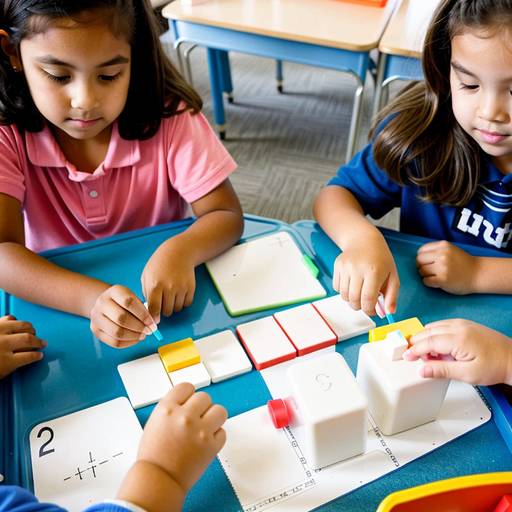
In this 2nd-grade math lesson, students will engage with the concept of addition through hands-on activities using various manipulatives. The lesson begins with a review of addition, followed by a demonstration where the teacher models how to combine groups using physical objects. Students will then work in small groups, using manipulatives to represent and solve simple addition problems from provided worksheets. After completing the activities, groups will share their findings with the class, reinforcing their understanding through discussion. The lesson concludes with a fun counting game that encourages movement and reinforces the addition concept. Assessment will involve observing student participation and reviewing their completed worksheets, with modifications and extensions available to support diverse learning needs. Overall, this interactive approach aims to make learning about addition engaging and accessible to all students.
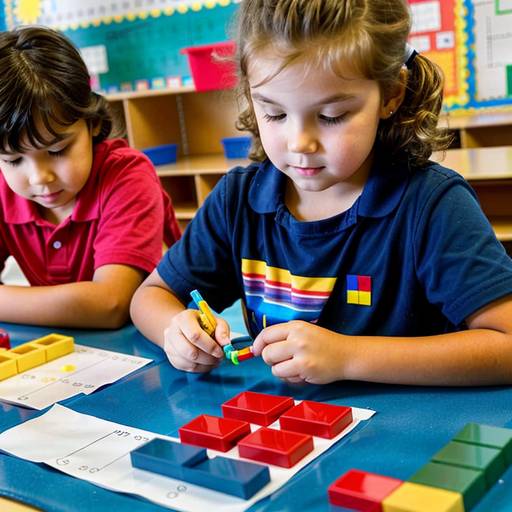
In this 1-hour math lesson for 2nd-grade students, the focus is on teaching addition through hands-on manipulatives. The session begins with an introduction to addition, emphasizing the benefits of using physical objects to visualize mathematical concepts. The teacher demonstrates a simple addition problem using counting cubes, allowing students to see how the numbers come together.
Students are then divided into small groups and given number cards featuring various addition problems. They work collaboratively to solve these problems by representing them with their manipulatives, counting the cubes, and recording their findings in their journals. Following this guided practice, students tackle an independent worksheet that includes visual aids and different addition problems, applying what they've learned.
The lesson concludes with a class discussion where students share their problem-solving experiences and reflect on the advantages of using manipulatives to understand addition better. Throughout the lesson, the teacher assesses student understanding through observations and reviews of completed worksheets and journal entries. Differentiation strategies are incorporated to ensure that all learners have the support they need to succeed.