
Filters
Level
Grade
Subject
Subject Area
Subject Topic
Standard(s)
Audience
Keyword
DurationMinutes
2nd Grade Addition Lesson Plans


This 2nd grade mathematics lesson focuses on teaching students the concept of addition through the use of manipulatives. The lesson begins with a warm-up activity that reviews basic addition concepts and introduces colored counting blocks as tools for visualization. Direct instruction follows, where the teacher models addition problems using manipulatives, guiding students through examples on the whiteboard.
In small groups, students collaborate to solve addition problems with their manipulatives, enhancing their understanding through discussion and teamwork. After group work, students engage in independent practice using worksheets to solidify their skills. The lesson concludes with a class discussion where students reflect on their learning experiences and share their strategies. Assessment is accomplished through worksheet review and observation during activities. Extensions are provided for students ready for more challenging concepts, ensuring a comprehensive understanding of addition. Overall, this lesson promotes an engaging and interactive approach to mastering addition skills.

In this 2nd-grade math lesson, students will focus on understanding addition through word problems. The session begins with a discussion on real-life applications of addition, followed by a clear explanation of what word problems are and how to solve them. During direct instruction, a sample word problem is read aloud and analyzed, demonstrating how to identify key information and formulate an addition equation.
Students will then engage in partner work, where they will use word problem cards to collaboratively identify important details and write corresponding equations. Following this, students will complete a worksheet featuring various addition word problems independently, allowing them to practice their problem-solving skills.
The lesson concludes with a review, where students share their solutions and the strategies they used to arrive at their answers. Assessment will involve observing student participation and evaluating their worksheet responses, ensuring that they grasp the concept of addition in the context of word problems. Modifications will be available for varying skill levels, ensuring all students can engage with the material effectively. Overall, the lesson aims to foster a deeper understanding of addition while developing critical thinking and collaboration skills.

In this 2nd-grade math lesson, students will learn about addition and the concept of regrouping. The lesson begins with a review of basic addition skills, gradually introducing the need for regrouping when adding two-digit numbers. Through direct instruction, students will observe a step-by-step demonstration of a two-digit addition problem involving regrouping, utilizing visual aids such as base ten blocks.
Following this, students will engage in guided practice, working in pairs to solve similar addition problems and share their methods with the class. They will then complete an independent practice worksheet focused on two-digit addition problems that require regrouping, reinforcing their understanding.
The lesson concludes with a recap of key concepts and an exit ticket activity where students reflect on their learning. Assessment will occur through observation during practice, review of completed worksheets, and evaluation of exit tickets to measure comprehension. Differentiation strategies will be implemented to support diverse learners, and a subsequent lesson will build on these skills by introducing subtraction with regrouping.

In this 2nd grade math lesson, students will focus on solving addition word problems by identifying key information and using addition strategies to arrive at solutions. The lesson begins with an introduction to word problems, using a simple example to demonstrate how to identify important numbers and keywords that indicate addition is needed.
Students will then work in small groups to read and discuss printed word problem cards, sharing their findings with the class while writing equations on the board. Following this, they will independently complete a worksheet featuring both numerical addition problems and word problems, practicing their skills in identifying key information and forming equations.
The lesson concludes with a group discussion where students share one of their solved word problems and receive a badge for their participation. Assessment will be based on observation during group work and the review of completed worksheets to ensure understanding. The lesson incorporates differentiation strategies to support diverse learner needs, providing more challenging problems for advanced students and manipulatives for those who require additional support.

In this 2nd Grade math lesson, students will focus on improving their addition skills through the exploration of word problems. The lesson begins with a brief introduction to addition, reinforcing its importance in real-life situations and engaging students with simple addition warm-ups.
During direct instruction, the teacher presents a sample word problem, guiding students through identifying key information and determining whether to add or subtract. This is followed by guided practice where the class collaboratively solves similar problems.
Students then engage in independent practice using worksheets that include various word problems, with hands-on materials available for additional support. The lesson culminates in a sharing session where students present their solutions and explain their thought processes.
To wrap up, the instructor summarizes the strategies used and assigns a few additional word problems for homework to reinforce the concepts learned. The lesson is designed to build students' confidence in addition while enhancing their problem-solving skills through collaborative and independent activities.

In this 2nd-grade math lesson, students will explore addition through word problems, enhancing their understanding and problem-solving skills. The lesson begins with a review of basic addition using interactive manipulatives, leading to a discussion about what constitutes a word problem.
Students will collaboratively work through a sample word problem, identifying essential information and formulating a number sentence. The teacher will guide students through additional word problems in pairs, promoting discussion and teamwork. Afterward, students will have the opportunity to solve problems independently, allowing for personalized practice while the teacher provides support as needed.
The lesson concludes with a class review, where students share their answers and explanations, fostering peer learning. Each student will reflect on what they learned by writing a summary on a sticky note. Assessment will involve observation during activities and the collection of worksheets to gauge individual understanding. Extension activities will allow students to create their own word problems, reinforcing their skills. Differentiation strategies will ensure that all students, regardless of their skill level, can engage effectively with the content.

In this 60-minute mathematics lesson designed for 2nd-grade students, the focus is on teaching addition through the use of a number line. The lesson begins with a warm-up discussion that encourages students to share their prior knowledge about addition, followed by a demonstration of how to visualize addition using a number line.
During direct instruction, students are shown how to make "jumps" on the number line to find sums for simple addition problems. Afterward, they engage in hands-on activities where they work with counters and solve problems together, fostering a collaborative learning environment.
Independent practice follows, where students complete worksheets that require them to illustrate their addition problems on a number line, reinforcing the concepts learned. The lesson concludes with a class discussion to share solutions and an exit ticket assessment that captures each student's understanding of using the number line for addition.
Overall, the lesson aims to build fluency in basic addition facts while providing visual and hands-on strategies for students to understand and master the concept.
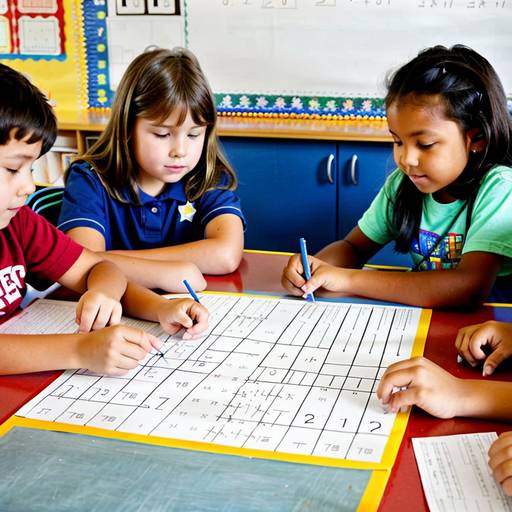
In this 2nd-grade mathematics lesson, students will explore the concept of addition with regrouping. The lesson begins with an engaging story that introduces a problem involving addition, prompting class discussion. Following this, the teacher will explain and demonstrate the regrouping process using examples on the whiteboard. Visual aids, such as base-10 blocks, will help illustrate how to manage carrying over when the sum exceeds ten.
Students will then participate in guided practice, working collaboratively to solve addition problems while applying the regrouping technique. The teacher will facilitate this process, encouraging students to share their strategies and approaches. Afterward, students will engage in independent practice with worksheets that feature problems requiring regrouping.
The lesson concludes with a recap of the main concepts and an exit ticket, where each student solves a simple problem to assess their understanding. Throughout the lesson, differentiation strategies will be employed to support both advanced learners and those who may need additional help. The teacher will reflect on the effectiveness of the lesson and consider adjustments for future instruction based on student performance and engagement.
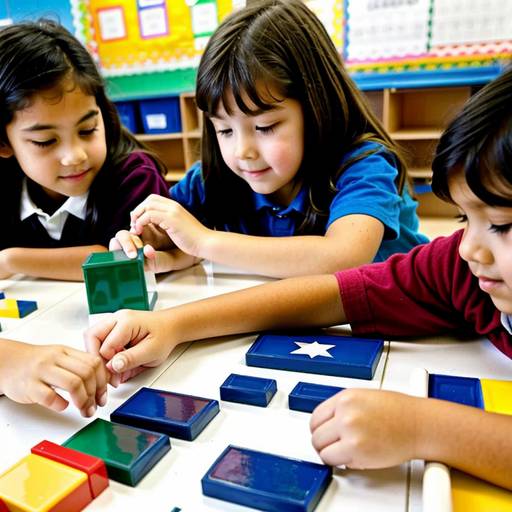
In this 2nd-grade math lesson, students will explore the concept of addition using hands-on manipulatives. The lesson begins with a review of addition basics, followed by a guided practice session where students work in groups to model addition problems using counting blocks. They will then participate in a series of “Addition Stations,” where they will solve different addition problems using manipulatives such as ten frames, number lines, and counting blocks. Each group will rotate through the stations, enhancing their understanding through interactive experiences. The lesson concludes with a discussion where students share their solutions and reflect on how manipulatives helped them grasp addition concepts. Assessment will be conducted through observation and completed worksheets, and accommodations will be provided for diverse learners. Extensions may include addition games and more advanced problems for those ready to challenge themselves.
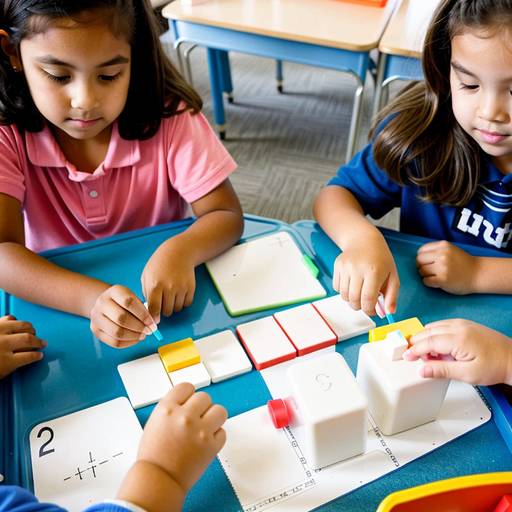
In this 2nd-grade math lesson, students will engage with the concept of addition through hands-on activities using various manipulatives. The lesson begins with a review of addition, followed by a demonstration where the teacher models how to combine groups using physical objects. Students will then work in small groups, using manipulatives to represent and solve simple addition problems from provided worksheets. After completing the activities, groups will share their findings with the class, reinforcing their understanding through discussion. The lesson concludes with a fun counting game that encourages movement and reinforces the addition concept. Assessment will involve observing student participation and reviewing their completed worksheets, with modifications and extensions available to support diverse learning needs. Overall, this interactive approach aims to make learning about addition engaging and accessible to all students.