
Filters
Level
Grade
Subject
Subject Area
Subject Topic
Standard(s)
Audience
Keyword
DurationMinutes
1st Grade Weather Lesson Plans


This 1st Grade Earth Science lesson focuses on understanding different types of weather and the basic tools used to measure it. Students engage in a discussion about weather and explore vocabulary related to sunny, rainy, windy, and snowy conditions. The teacher introduces measurement tools such as thermometers, rain gauges, and anemometers, explaining their functions and importance in daily life.
Students then participate in guided practice by forming small groups, each assigned a specific weather tool. They head outdoors to observe current weather conditions and record their findings in a "Weather Observation Journal," where they draw and describe what they see. After sharing their observations with the class, the students reflect on how weather affects their lives and the significance of weather changes.
The lesson wraps up with a recap of key points and encourages students to continue observing weather at home. Assessment occurs through the review of their journal entries and participation in discussions. Extensions include keeping a weekly weather journal and contributing to a classroom weather chart. Overall, the lesson nurtures curiosity about the environment while providing foundational knowledge of weather and observation skills.
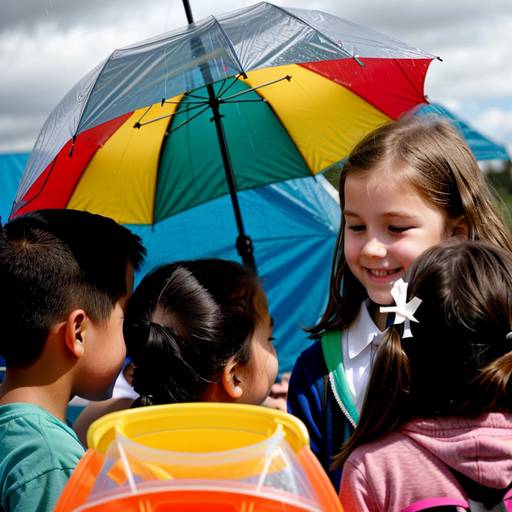
In this first-grade Earth Science lesson, students explore the concepts of weather and the water cycle. The lesson begins with a discussion about different types of weather, where students express their preferences and feelings associated with various conditions. Weather symbols are introduced to help students identify sunny, rainy, snowy, windy, and cloudy weather.
Next, the teacher presents a diagram of the water cycle, explaining its stages: evaporation, condensation, precipitation, and collection, potentially demonstrating these concepts with a simple experiment. Students then participate in an engaging activity where they create weather journals, illustrating their favorite weather and writing a sentence about what activities they enjoy during that weather.
After sharing their journals with classmates, the lesson concludes with a recap and an exit ticket activity, where students draw a weather symbol and describe something they learned. Throughout the session, students are assessed based on their participation, journal entries, and exit tickets, enabling them to actively engage with fundamental Earth science concepts while expressing their creativity. Extensions for the lesson may include outdoor observation and weather forecasting activities.