
Filters
Level
Grade
Subject
Subject Area
Subject Topic
Standard(s)
Audience
Keyword
DurationMinutes
1st Grade Time Patterns Lesson Plans


In this 1st grade math lesson, students will explore the concepts of reading time on both analog and digital clocks. The lesson begins with a discussion on the importance of time in daily life, followed by a direct instruction segment demonstrating how to read different clock types. Students will practice reading clock times as a class using visual aids.
Next, they will engage in a guided practice activity focused on creating time patterns related to their daily routines. Afterward, students will work independently on worksheets that reinforce time recognition and pattern creation. The class will conclude with students sharing their routines and a summary of the key concepts learned.
Assessment will involve observing student participation and reviewing their worksheets to gauge their understanding of reading time and recognizing time patterns. The lesson also includes accommodations for students needing additional support and suggests follow-up activities to further reinforce learning. Overall, the lesson aims to make the concept of time interactive and relatable while building foundational math skills.
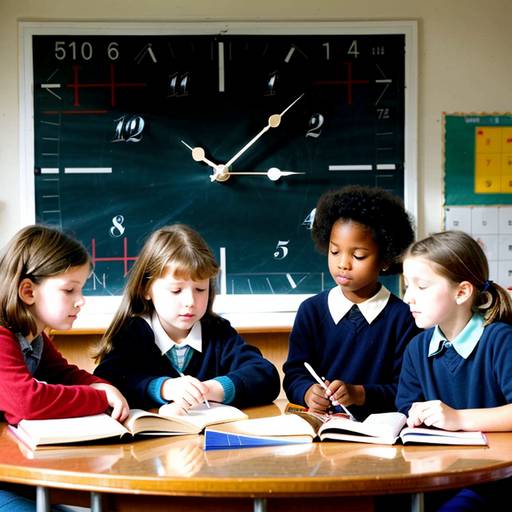
In this 1st-grade mathematics lesson, students will explore the concept of time by learning to read analog clocks and recognizing time patterns related to their daily routines. The lesson begins with a friendly introduction and a discussion about the importance of time. Students will engage in direct instruction that includes identifying clock components and practicing telling time to the hour.
Through guided activities, students will work in small groups to set their clocks to various specified times and collaboratively create time patterns on the board. For independent practice, they will complete worksheets that involve matching activities to the appropriate times and extending time sequences.
The lesson emphasizes interaction, with opportunities for sharing individual experiences related to time and routines. Student understanding will be assessed through observation during activities and by reviewing their worksheets. To further support learning, adaptations will be available for students needing extra assistance, ensuring that everyone can engage with the concepts being taught. The session will conclude with a brief review highlighting key points learned.