
Filters
Level
Grade
Subject
Subject Area
Subject Topic
Standard(s)
Audience
Keyword
DurationMinutes
1st Grade Basics Lesson Plans

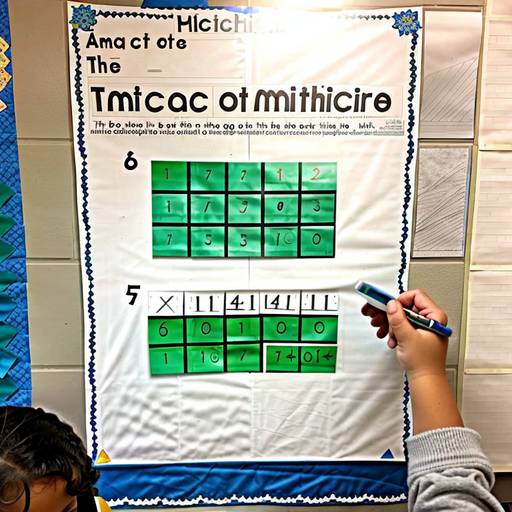
In this 1st-grade math lesson, students are introduced to basic multiplication concepts through hands-on activities and storytelling. The lesson begins with a discussion about what multiplication means, emphasizing that it involves adding equal groups together. Students then engage in a practical activity where they create their own groups using counting cubes and translate these groups into multiplication sentences.
Next, the teacher presents story cards that illustrate real-world scenarios involving groups, encouraging students to visualize and work through the stories using their cubes. This helps solidify the connection between multiplication and repeated addition. After exploring stories, students complete a worksheet featuring images of grouped objects, allowing them to practice formulating multiplication equations independently.
The lesson concludes with a group discussion, where students share their findings and equations, reinforcing their understanding of the concept. Observations and completed worksheets serve as assessment tools to gauge students' grasp of multiplication. Accommodations are provided for varying skill levels, ensuring that all students can engage with the material meaningfully. Overall, the lesson promotes an interactive and relatable approach to learning multiplication fundamentals.
In this first-grade math lesson, students will be introduced to the concept of multiplication as a method of repeated addition. The lesson begins with a discussion about multiplication, encouraging students to share their thoughts on the topic. Through visual demonstrations and group activities, students will learn to create and identify groups of objects that illustrate multiplication problems.
After a direct instruction phase where simple multiplication concepts are explained using drawings and manipulatives, students will engage in guided practice by forming groups with counting objects based on given multiplication scenarios. They will then complete a worksheet with simple multiplication problems, applying their understanding through drawing or using manipulatives.
The lesson will conclude with a review of key concepts, inviting students to share their findings. Observations during activities will serve as informal assessments of their grasp of multiplication. An optional extension activity involving a dice game may be included to further reinforce the lesson's objectives. This engaging approach prioritizes hands-on learning and promotes collaboration among students, catering to diverse learning needs.