
Filters
Level
Grade
Subject
Subject Area
Subject Topic
Standard(s)
Audience
Keyword
DurationMinutes
1st Grade Money Lesson Plans


In this 1st-grade math lesson, students will learn about money by identifying various coins, including pennies, nickels, dimes, and quarters, and understanding their values. The lesson begins with a discussion on the concept of money, followed by direct instruction where the teacher models how to count coins using visual aids and involves students in hands-on participation. Following this, students will engage in guided practice in small groups, using real or play coins to create specific amounts. They will have an independent activity involving worksheets focused on counting coins. The lesson concludes with a fun mini store activity where students can use play money to "purchase" items, allowing them to apply what they’ve learned in a practical setting. Finally, the class will regroup to discuss their learning and reinforce key concepts. The assessment is based on observation during activities and the completion of the worksheets, ensuring that all students grasp the concepts related to counting and recognizing coins. Extensions for the lesson include creative writing and interactive online games for further practice.

The lesson plan focuses on introducing 1st-grade students to the concepts of money, specifically coins and their values. It aims to help students identify different types of coins—pennies, nickels, dimes, and quarters—and understand how to count them. The lesson begins with an engaging discussion on money and its purpose, followed by direct instruction where students learn the names, images, and values of each coin.
In the guided practice segment, students group and count their coins collectively, promoting collaboration and reinforcing their counting skills. The highlight of the lesson is an interactive "store" activity, where students can buy items priced at 1-10 cents using play money. This hands-on experience allows them to apply their counting knowledge in a real-world context.
The lesson concludes with a group discussion where students share their experiences and what they learned. Assessment includes observing students during the activity and collecting worksheets to evaluate their understanding of coin identification and counting. Additionally, differentiation strategies are included to support a range of learning needs. Overall, the lesson combines direct instruction, practice, and interactive engagement to create a comprehensive learning experience centered around money.
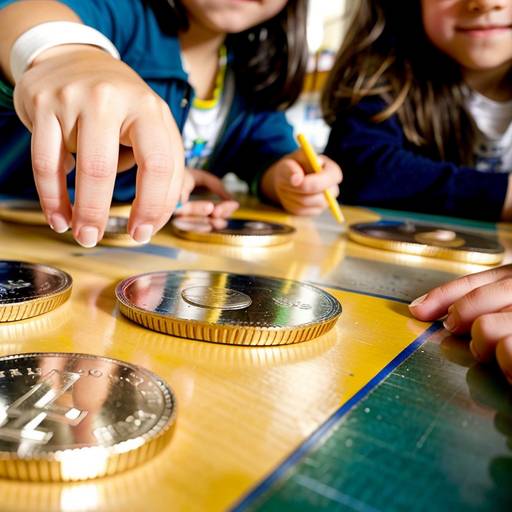
In this 1st-grade math lesson plan, students will explore the concept of money by identifying and differentiating between various coins: pennies, nickels, dimes, and quarters. The lesson begins with an engaging discussion on the use of money in everyday life, followed by hands-on activities that involve examining real or play coins to understand their values.
During direct instruction, students will participate in coin identification exercises and practice counting coins in groups. The highlight of the lesson is the setup of a classroom "store," where students can role-play as shoppers and cashiers, allowing them to apply their knowledge in a simulated buying experience. This interactive activity fosters understanding of how to use coins in transactions.
To conclude, students will reflect on what they have learned, and their understanding will be assessed through observational evaluation during the store activity and a simple worksheet that reinforces coin recognition and values. Differentiation strategies ensure that all learners can participate and benefit from the lesson.