
Filters
Level
Grade
Subject
Subject Area
Subject Topic
Standard(s)
Audience
Keyword
DurationMinutes
1st Grade Time Lesson Plans

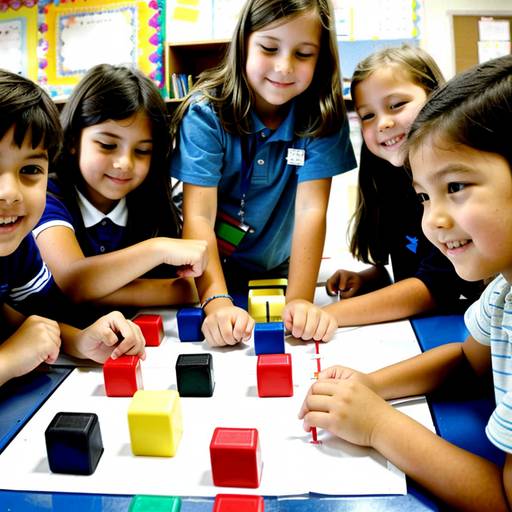
In this engaging 1st-grade math lesson, students will explore the concepts of measurement and time through hands-on activities. They will begin by discussing the importance of measurement and learning to tell time using both analog and digital clocks.
Students will participate in a group activity where they measure various classroom objects using non-standard units, such as paper clips and blocks, recording their findings on chart paper. Following this, they will enhance their time-telling skills through practice with time flashcards, where they will identify different times, and create their own paper plate clocks to demonstrate their understanding of telling time to the hour and half-hour.
Throughout the lesson, students will work collaboratively, share their findings, and engage in discussions that reinforce their learning. The lesson will end with a review of key concepts and an assessment of their understanding through observation, group recordings, and their created clocks. Extension activities will allow for further exploration of measurement and time, ensuring a comprehensive grasp of these fundamental math skills.
This 1st-grade math lesson focuses on helping students understand the concepts of measurement and time through interactive and hands-on activities. The lesson begins with a discussion about measurement and time, prompting students to share their prior knowledge.
Next, students work in small groups to measure various classroom objects using rulers or string, encouraging estimation and discussion of their findings. Following the measurement activity, the class moves on to learning about telling time using a large classroom clock. Students practice setting the hands of smaller analog clocks to specific times based on teacher prompts.
To reinforce the concepts, students complete worksheets that involve measuring items at home and drawing clock hands to show different times. The lesson concludes with a reflection on what students have learned and a review of measurement and time concepts. Throughout the lesson, students are assessed based on participation, group collaboration, and accuracy on their worksheets, with the opportunity for extensions that encourage continued exploration at home.
This 1st-grade math lesson focuses on the concepts of measurement and time, aiming to develop students' understanding of length using standard units (inches and feet) and their ability to read clocks to tell time to the hour and half-hour. The lesson begins with an engaging introduction that highlights the importance of measurement in everyday life, followed by direct instruction that demonstrates how to use a ruler and interpret a clock.
Students participate in guided practice through measurement stations, where they measure various objects and record their findings, as well as practice telling time with worksheets featuring clock faces. Independent practice involves a short quiz to reinforce their understanding of both measurement and time-telling skills. Assessment is conducted through observation during activities and evaluating the quizzes to ensure comprehension.
Differentiation strategies are included to support advanced learners and those needing extra assistance, while extensions suggest further engagement with measurement in real-life contexts. This interactive lesson fosters student participation and provides a solid foundation in measurement and time concepts.
This lesson focuses on teaching first-grade students the concepts of time and measurement. The objectives include helping students learn to read the hour on an analog clock and measure objects using non-standard units, such as paperclips and cubes. The lesson begins with an introduction to the importance of time, followed by direct instruction on reading clocks and measuring objects. Students engage in guided practice activities, where they work in groups to measure various classroom items and practice telling time using worksheets. Independent practice involves drawing their favorite activities and identifying the time they occur, along with measuring objects at their desks. Assessment occurs through worksheet reviews and observation of group work. Differentiation strategies are incorporated to accommodate varying skill levels, and extensions encourage real-life application of the concepts learned. The lesson concludes with a reflection on its effectiveness and areas for improvement.