
Filters
Level
Grade
Subject
Subject Area
Subject Topic
Standard(s)
Audience
Keyword
DurationMinutes
1st Grade Lines Lesson Plans


This first-grade lesson plan focuses on introducing students to the basic concepts of geometry, specifically related to lines and shapes. The lesson begins with a discussion to gauge students' prior knowledge about lines, followed by a demonstration of three types of lines: straight, curved, and zigzag. Students engage in identifying these lines through guided practice, including a "line hunt" around the classroom to find real-world examples.
As part of their independent practice, students create their own shapes using different types of lines, allowing for creativity and personal expression. They then share their shapes with partners to reinforce their understanding. The lesson concludes with a recap of the key concepts and an exit ticket activity, where students identify one line type and one shape they've created. Assessment is based on student participation, the shapes they create, and their exit ticket responses. Differentiation strategies are included to support various learners, and potential extensions encourage further exploration of geometry through technology and outdoor activities.

In this first-grade math lesson, students will explore the concepts of geometry by learning about different types of lines and angles. The session begins with an interactive discussion that prompts students to identify lines found in their environment. They will learn to differentiate between straight, zigzag, and curved lines, as well as understand the concept of right angles.
During guided practice, students will work in small groups to create and label their own lines using rulers and yarn, and they will search for objects in the classroom that display right angles. Following this, they will independently complete worksheets that reinforce their understanding of line types and angles through coloring and identification exercises.
The lesson concludes with a review that encourages students to share their findings, reinforcing the idea that lines and angles exist all around them. Assessment will be conducted through observation and worksheet review, ensuring that all students have engaged with the material effectively. Differentiation strategies will be in place to support varying learning needs, fostering an inclusive learning environment.
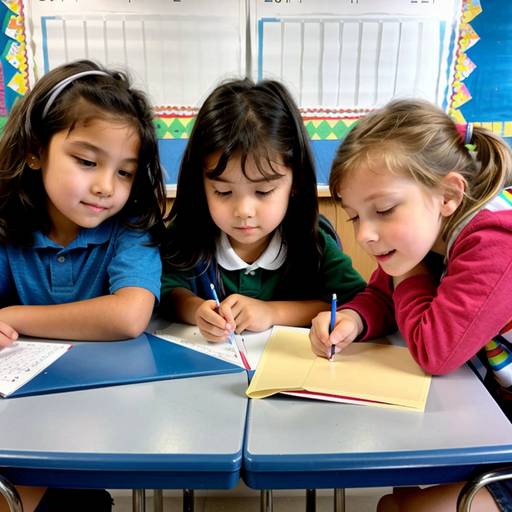
This 1st-grade math lesson focuses on geometry, specifically the identification and understanding of different types of lines and angles. The lesson begins with a read-aloud of a picture book that introduces lines and shapes, followed by a discussion on straight and curved lines, complete with visual demonstrations. Students then learn about three types of angles—right, acute, and obtuse—using flashcards and real-world examples.
In a guided practice activity, students work in small groups to create straight and curved lines using string or yarn, promoting teamwork and hands-on learning. They also embark on an "Angle Hunt" around the classroom to find and identify examples of the angles discussed. For independent practice, students engage in a craft activity where they create artwork featuring the lines and angles they learned about, encouraged to label their work.
The lesson concludes with a sharing session where students present their artwork and describe the lines and angles included. Assessment is conducted through observation during activities and by reviewing the finished art pieces. The lesson emphasizes interactive learning and aims to cultivate students' understanding of basic geometric concepts while also allowing for creativity and expression.
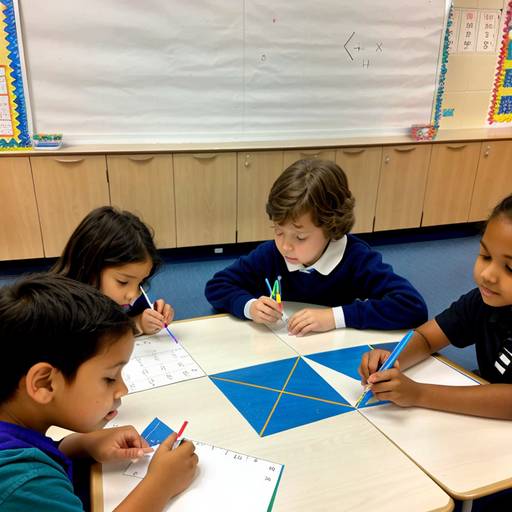
This lesson plan focuses on introducing first-grade students to basic geometric shapes and lines, emphasizing their identification and real-world applications. The session begins with a class discussion about geometry where students engage by naming and describing various shapes, such as circles, squares, triangles, and rectangles. The instructor introduces straight and curved lines through demonstrations, encouraging students to explore their environment for examples.
Following direct instruction, students participate in an interactive scavenger hunt, seeking out and drawing shapes found around the classroom or school. This supports their understanding of the shapes they encounter daily. The lesson continues with a creative activity where students use colored paper, scissors, and glue to create artwork that incorporates the shapes and lines they have learned about. They then share their creations with classmates, reinforcing their understanding through communication.
Assessment occurs through observation during activities, review of scavenger hunt findings, and evaluation of the completed artwork based on creativity and the use of various shapes and lines. The lesson includes adaptations for differing skill levels, ensuring all students can successfully engage with the material. Overall, the plan aims to foster an appreciation for geometry through hands-on learning and artistic expression.