
Filters
Level
Grade
Subject
Subject Area
Subject Topic
Standard(s)
Audience
Keyword
DurationMinutes
1st Grade Reading Fluency Lesson Plans


In this 1st-grade Language Arts lesson focused on reading and reading fluency, students will engage in various activities to enhance their reading skills. The lesson begins with a discussion about the importance of reading, introducing the concept of reading fluency encompassing accuracy, speed, and expression. The teacher models fluent reading using a selected picture book, encouraging students to identify key story elements such as characters, settings, and events.
Following this, students participate in paired reading, where they take turns reading aloud to each other, practicing fluency and expression. Each student will track their reading times using fluency charts, allowing them to monitor personal progress and set goals for improvement. The lesson concludes with a reflection on the reading experience, where students can share their thoughts and feelings about the activity. They will receive small rewards for their participation, reinforcing a positive reading environment. Throughout the lesson, differentiation strategies are included to support various learners, ensuring an inclusive approach to developing reading fluency.
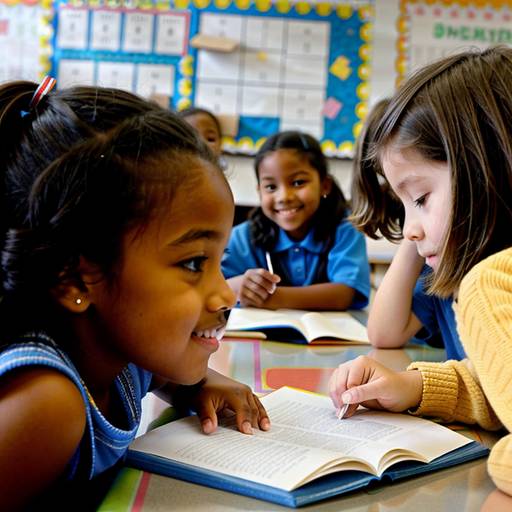
This 1st-grade Language Arts lesson focuses on reading fluency and comprehension. The lesson begins with a discussion about what reading fluency means, followed by an introduction of high-frequency words that will aid in students' reading development. The teacher models fluent reading with a short passage, demonstrating expression and speed.
Students then engage in a paired reading activity, where they take turns reading leveled texts aloud to each other for one minute, allowing them to practice fluency. Following the paired reading, the class participates in a discussion to assess comprehension by answering questions about the story.
For independent practice, students receive fluency exercise sheets to underline high-frequency words and reflect on the text. The lesson concludes with a group reflection, encouraging students to share their experiences and consider reading at home.
Assessment occurs through observation during partner reading, review of comprehension responses, and collection of the fluency sheets. The lesson includes extensions for advanced students and differentiation to support those who may need additional help, ultimately aiming to foster a love of reading and improve fluency skills in a fun and interactive manner.