
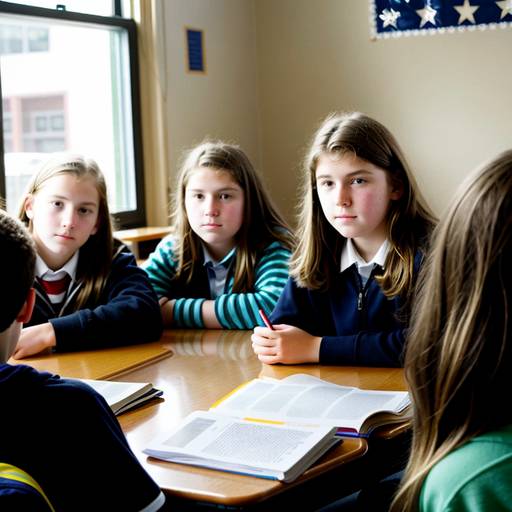
The 6th-grade curriculum encompasses a broad range of subjects aimed at developing critical thinking, communication, and responsible citizenship in students. In English Language Arts, learners engage with diverse literary genres and enhance their writing skills through narrative, informative, and argumentative compositions, while emphasizing research and collaboration. The mathematics component focuses on number systems, ratios, and problem-solving strategies and encompasses geometry and statistics. Science topics cover energy, ecosystems, and Earth's systems, encouraging inquiry and hands-on experimentation. Social studies explore U.S. history, geography, and civics, promoting understanding of global cultures and current events. Additionally, physical education fosters wellness through various activities, health education addresses nutrition and self-care, and fine arts cultivates creativity through visual and performing arts, enhancing the overall educational experience for students.
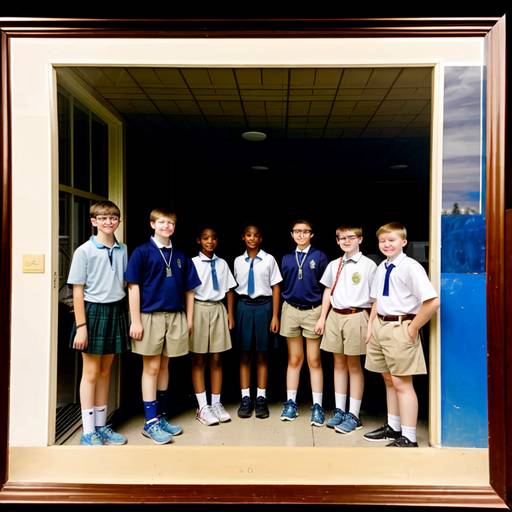
The 7th Grade Curriculum encompasses a comprehensive approach to education, covering essential subjects such as English Language Arts, Mathematics, Science, Social Studies, Health and Physical Education, the Arts, Technology, and World Languages. Students engage with diverse literature to enhance their reading and writing skills, explore mathematical concepts including ratios and geometry, and participate in hands-on science investigations that foster inquiry and creativity. Social Studies introduces students to global cultures and historical events, while health education emphasizes personal wellness. The curriculum also nurtures creativity through the arts and equips students with vital technological skills, supporting their growth into informed, responsible, and well-rounded individuals.

The 8th Grade curriculum encompasses key areas of study across various subjects, including English Language Arts, Mathematics, Science, and Social Studies. In English Language Arts, students engage with diverse texts to enhance their analytical and writing skills, focusing on crafting essays and effective communication. The Mathematics component reinforces essential concepts such as number systems, algebraic functions, and real-world problem-solving. Science education is characterized by inquiry-based learning, where students explore physical, life, and earth sciences through hands-on experiments and the engineering design process. Finally, the Social Studies curriculum offers students a comprehensive understanding of history, geography, and civics, encouraging them to analyze significant events and develop a sense of civic responsibility. Overall, the curriculum is designed to foster critical thinking, collaboration, and a well-rounded knowledge base in preparation for future academic challenges.