

This curriculum for infants aged 6 months to 1 year focuses on fostering holistic development across several key areas: language, cognitive, physical, social and emotional growth, and approaches to learning. It emphasizes the importance of daily interactions that promote verbal skills through conversations, reading, and singing, while also engaging infants in activities that enhance cognitive abilities through exploration and problem-solving play. Physical development is encouraged through safe movement activities that build strength and coordination, while social and emotional skills are nurtured through responsive caregiving and interactive play with caregivers and peers. Additionally, the curriculum cultivates independent learning and curiosity, providing a structured yet flexible framework for early education that prioritizes a comprehensive understanding of the interconnectedness of these developmental domains.

This comprehensive curriculum for toddlers aged 1 to 3 focuses on promoting holistic development across multiple domains, including language and literacy, mathematics, science, social studies, creative arts, physical development, and social-emotional growth. It encourages early communication skills through interactive storytelling and print activities, while mathematical concepts are explored through sorting, counting, and pattern recognition. Scientific inquiry is fostered through sensory exploration and observations of the environment. Additionally, social studies components help toddlers understand their identities and develop empathy, while creative arts promote imaginative expression. Physical activities support motor skills and health awareness, and the curriculum emphasizes emotional regulation and social interactions. Overall, it offers a well-rounded foundation for young learners, promoting curiosity and a love for learning.
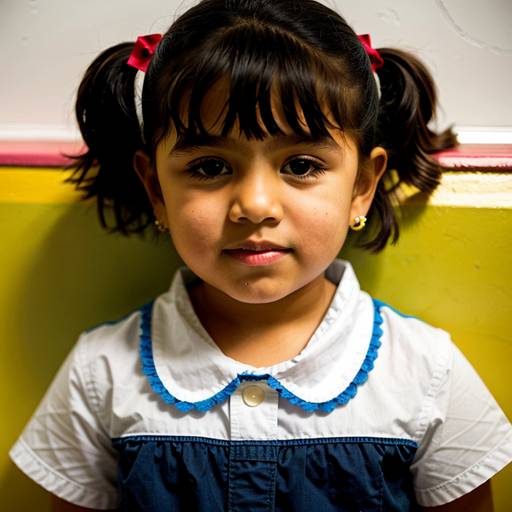
The curriculum for preschool education focuses on promoting holistic development through various essential domains, including language arts, mathematics, science, social studies, fine arts, and physical education. It emphasizes early literacy skills by fostering phonemic awareness, vocabulary development, and storytelling. In mathematics, children engage with numbers, shapes, counting, and basic operations through hands-on activities. The science component encourages curiosity and experimentation, allowing children to explore their surroundings and develop observational skills. Social studies provide an understanding of community, family dynamics, and cultural awareness, while fine arts stimulate creativity through visual arts and music. Lastly, physical education activities promote gross motor skills and an understanding of healthy lifestyles, ensuring a well-rounded approach to early childhood education.