

This curriculum is designed for home school educators catering to infants aged 6 months to 1 year, focusing on five essential developmental areas: Physical Development, Cognitive Development, Social and Emotional Development, Language Development, and Approaches to Learning. It provides structured activities aimed at enhancing gross and fine motor skills through play and exploration, while also fostering cognitive engagement with games and problem-solving tasks. Social skills and emotional regulation are supported through bonding activities and peer interactions, and language development is encouraged through communication and active engagement, including reading and singing. Additionally, the curriculum promotes a lifelong love of learning by stimulating curiosity and creativity, ensuring a well-rounded approach to early childhood development.

This toddler curriculum offers a structured framework for early learning, targeting children aged 1 to 3 across key developmental areas. It emphasizes language and literacy through storytelling and interactive reading, while introducing foundational math concepts like counting and shape recognition via playful activities. The science and technology segment fosters curiosity with hands-on sensory explorations and experiments, encouraging toddlers to observe and describe their environment. Social studies focus on community and diversity, promoting values of sharing and cooperation. Additionally, creative arts are integrated to enhance self-expression through various mediums, music, and movement, ensuring a holistic approach that nurtures cognitive, emotional, social, and physical growth.
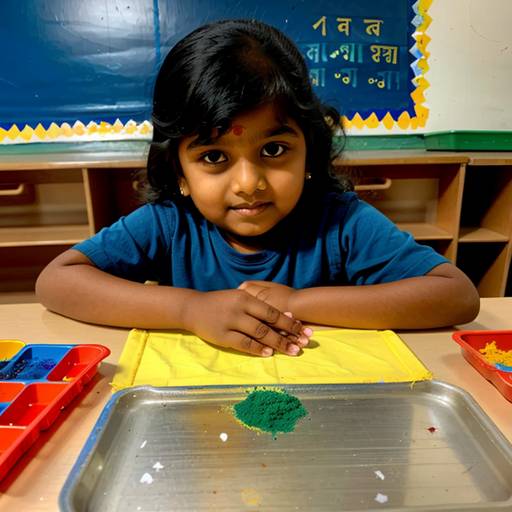
The preschool curriculum provides a comprehensive framework designed to support early childhood development across multiple domains. It focuses on English Language Arts by enhancing listening, speaking, reading, and writing skills through interactive activities. The mathematics component introduces foundational concepts such as counting, basic addition and subtraction, and measurement through hands-on manipulatives. In science, children explore their environment, investigate living and nonliving things, and learn about weather and ecosystems. Social studies foster self-awareness, emotional intelligence, and an understanding of community roles and cultural diversity. Finally, the physical development and health section promotes gross and fine motor skills through active play and discussions about health and safety, ensuring a holistic approach to early learning.