

The curriculum for infants focuses on supporting key areas of development in children aged 6 months to 1 year, encompassing social-emotional, physical, language, cognitive, mathematical, scientific, social studies, fine arts, physical education, and health education. It promotes secure attachments and emotional awareness while encouraging motor skills through interactive play. Language development is fostered through stories and songs, while cognitive development is stimulated with exploration and problem-solving activities. The curriculum introduces foundational concepts in mathematics and science through engaging, hands-on experiences and encourages social skills and empathy through group activities. Creative expression is encouraged through art and music, and health education helps build self-help skills and personal hygiene awareness, creating a holistic approach to early childhood education.

The curriculum for toddlers aged 1 to 3 years is designed to promote holistic development across multiple domains, including language, mathematics, science, social studies, physical development, visual and performing arts, and social-emotional skills. It emphasizes interactive and hands-on learning experiences that foster communication and vocabulary growth, foundational math concepts, scientific inquiry, and an understanding of self and community. Through creative arts and active play, toddlers develop their gross and fine motor skills, while social and emotional components focus on self-regulation, empathy, and cooperative interactions. This comprehensive approach aims to nurture curiosity and initiative, equipping young learners with essential skills for lifelong learning in a supportive home environment.
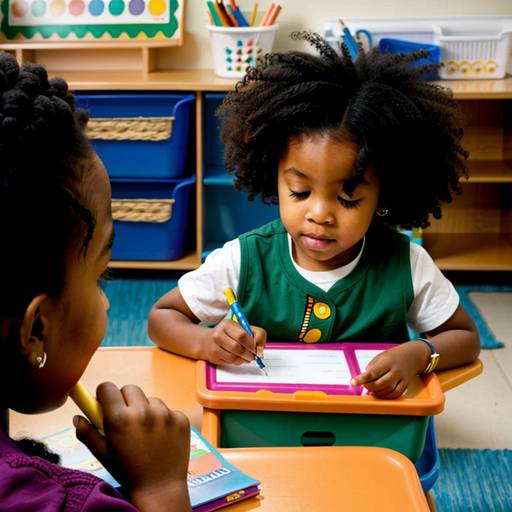
This preschool curriculum provides a comprehensive framework for early childhood education, focusing on key developmental areas such as English Language Arts, Mathematics, Science, and Social Studies. It emphasizes the development of language and literacy skills through storytelling and interactive discussions; foundational math concepts through hands-on exploration and problem-solving; inquiry-based learning in science with an emphasis on observation and experimentation; and social understanding by exploring self-identity, community roles, and cultural diversity. By engaging with an array of activities, children are encouraged to develop critical thinking, creativity, and a sense of empathy, setting the stage for lifelong learning and personal growth.