
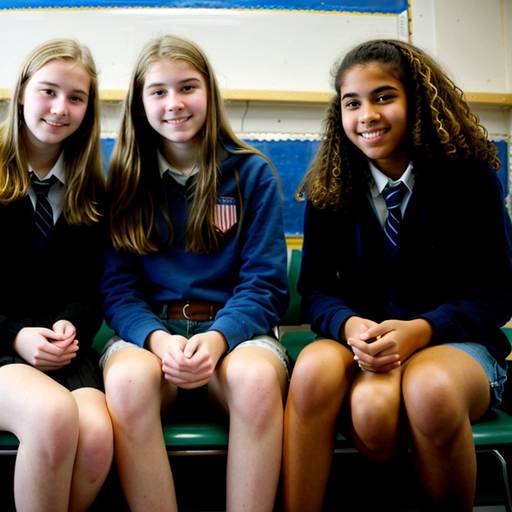
| Level | High School |
| Grade | 10th Grade |
| State | Montana |
| Age Range | 15 to 16 |
| Language | English |
Areas Of Development
Unlocking Potential Through a Comprehensive Curriculum
As educators, you play a vital role in shaping the minds and futures of your students. Our 10th Grade Curriculum is meticulously designed to meet Montana academic standards while embracing a holistic approach to learning. It encompasses a diverse range of subjects, equipping students with the skills they need to thrive in an increasingly complex world. Below is a detailed overview of our curriculum, emphasizing its unique features and benefits for the classroom environment.
English Language Arts: Building Literacy and Communication SkillsOur English Language Arts program encourages deep engagement with literature and informational texts. Students will:
- Analyze Themes: Cultivate critical thinking by exploring themes and central ideas across various literary genres.
- Evaluate Media: Understand how different mediums convey information, enhancing their ability to critically assess news and digital content.
- Refine Writing Skills: Produce clear and coherent writing tailored to various audiences and purposes, fostering creativity and voice.
- Collaborative Discussions: Engage in thoughtful dialogue with peers, promoting listening and speaking skills vital for future discourse.
- Grammar Mastery: Build a strong command of English grammar and usage, laying the groundwork for effective written and verbal communication.
In our mathematics curriculum, students will:
- Explore Quantitative Reasoning: Apply reasoning and mathematical concepts to solve real-world problems effectively.
- Model Relationships: Use functions to represent and analyze relationships between quantities, preparing them for advanced mathematical concepts.
- Geometric Applications: Develop spatial reasoning and apply geometric principles in practical contexts.
- Data Interpretation: Utilize statistics and probability to summarize and interpret data, enhancing analytical skills crucial for future studies.
Our science curriculum emphasizes inquiry, experimentation, and real-world application:
- Understanding Matter: Model and interpret atomic and molecular structures, fostering a deeper understanding of physical science.
- Ecological Interactions: Analyze ecosystems and the relationships between organisms, promoting awareness of environmental issues.
- Earth's Systems: Evaluate models explaining Earth's interconnected systems, nurturing systems thinking.
- Engineering Applications: Apply scientific principles to design innovative solutions to pressing global problems.
In social studies, students will:
- Historical Analysis: Develop critical skills to analyze primary and secondary sources, gaining diverse perspectives on history.
- Geographic Literacy: Utilize geographic tools to understand spatial relationships and their impact on society.
- Civic Engagement: Explore the significance of civic participation and government roles, preparing them for active citizenship.
- Economic Understanding: Interpret economic data and analyze systems, fostering informed decision-making about personal and societal finances.
Our physical education program emphasizes:
- Fitness and Health: Engage in a variety of physical activities to enhance fitness levels, promoting lifelong health habits.
- Collaboration: Work cooperatively with peers, developing teamwork and social skills critical in welcoming diverse environments.
- Safety Awareness: Learn and practice safety measures in physical activities, instilling responsible behaviors.
The art curriculum provides students with opportunities to:
- Demonstrate Proficiency: Engage in various artistic forms, techniques, and materials for self-expression.
- Analyze Performances: Participate in and critique performances, fostering appreciation for the arts.
- Explore Art History: Investigate historical art movements, connecting cultural contexts to contemporary practices.
Our curriculum also includes a variety of electives, such as foreign languages, computer science, career and technical education, music, and drama/theater, enabling students to explore diverse interests and develop specialized skills.