
The Kindergarten curriculum provides a comprehensive foundation across key subjects, including English Language Arts, Mathematics, Science, and Social Studies. In English Language Arts, students develop literacy skills through activities focused on reading comprehension, writing, and effective communication. The Mathematics segment introduces core concepts like counting, addition, subtraction, and basic geometry, encouraging critical thinking and problem-solving. The Science component engages students with hands-on exploration of physical, life, and Earth sciences, fostering curiosity about the natural world. Social Studies teaches students about their communities, emphasizing civics, geography, history, and basic economics. Overall, the curriculum is designed to support young learners' holistic development and prepare them for future educational success.
The 1st Grade Curriculum provides a comprehensive educational framework that covers essential subjects including English Language Arts, Mathematics, Science, Social Studies, Physical Education, Music, and Art. In English Language Arts, students develop foundational literacy skills, engage in reading comprehension, and practice writing across various formats. The Mathematics segment emphasizes number sense, addition and subtraction, measurement, and data analysis. In Science, students explore concepts related to matter, living organisms, and earth systems through hands-on inquiry. Social Studies fosters an understanding of community roles, geography, and history. The Physical Education component focuses on developing motor skills, promoting teamwork, and encouraging healthy habits. Additionally, music and art education enhance students' creativity and self-expression through various artistic mediums. This curriculum supports well-rounded development, fostering both academic and social-emotional growth in young learners.
The 2nd grade curriculum encompasses a comprehensive framework designed to support young learners across multiple subjects, including English Language Arts, Mathematics, Science, and Social Studies. In English Language Arts, students enhance their reading comprehension, writing skills, and oral communication through engaging activities focused on narrative and informative texts. The Mathematics section emphasizes foundational skills in addition and subtraction, number sense, measurement, and geometry, encouraging problem-solving and critical thinking. The Science curriculum promotes exploration of physical science, life science, and earth science through hands-on experiments and practical applications. Finally, the Social Studies component helps students understand their role in society by exploring history, geography, civic responsibilities, and basic economic concepts, fostering a sense of community and global awareness. Overall, the curriculum is designed to cultivate a well-rounded education, preparing students for future academic success.
The curriculum for 3rd-grade students encompasses a comprehensive approach to education, focusing on core subjects such as language arts, mathematics, science, social studies, physical education, and the arts. In language arts, students develop reading comprehension, writing skills across various genres, and effective communication through discussions and presentations. Mathematics instruction covers fundamental operations, place value, measurement, and basic geometry. The science component engages students in physical, life, and earth sciences through hands-on experiments and inquiry-based learning. Social studies lessons introduce students to historical, geographical, civic, and economic concepts, fostering an understanding of their community and the wider world. Physical education promotes fitness and teamwork, while the arts curriculum encourages creativity through visual arts and music. Overall, the curriculum aims to foster critical thinking, problem-solving, and collaboration in students, preparing them for future academic endeavors.

The 4th-grade curriculum encompasses a wide range of subjects, including English Language Arts, Mathematics, Science, Social Studies, and Health and Physical Education. In English Language Arts, students focus on reading comprehension, writing skills across various genres, and grammar, enhancing their ability to analyze texts and articulate ideas effectively. Mathematics emphasizes number operations, fractions, geometry, and data analysis, fostering foundational skills for future learning. The Science component invites hands-on exploration of physical, life, and earth sciences, encouraging inquiry and understanding of the natural world. Social Studies features the study of local history, cultures, geography, and civic education, promoting awareness and engagement with community and governance. Lastly, Health and Physical Education emphasize the importance of wellness, nutrition, and physical fitness, supporting students' overall development and teamwork skills. Together, these elements provide a balanced and comprehensive educational experience for 4th graders.
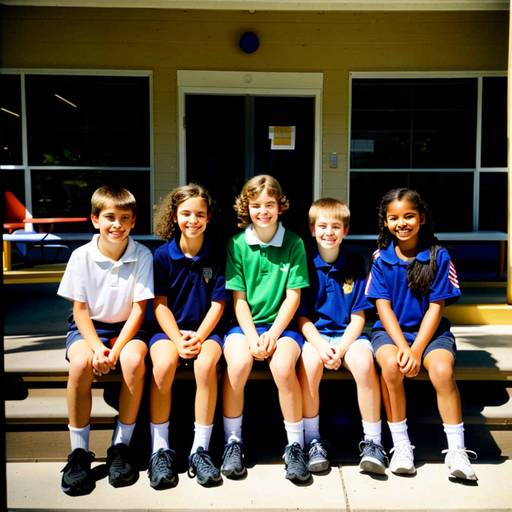
The 5th grade curriculum is designed to provide a comprehensive educational experience that spans multiple subjects, including English Language Arts, Mathematics, Science, Social Studies, Fine Arts, and Physical Education. In English Language Arts, students enhance reading comprehension and writing skills through the analysis of texts and the creation of various written works. The Mathematics program focuses on operations, number sense, measurement, and geometry, building a strong foundation for problem-solving. Science education emphasizes inquiry-based learning, covering topics such as engineering design and various scientific disciplines. Social Studies explores history, geography, civics, and economics, fostering an understanding of civic responsibilities and global awareness. Additionally, Fine Arts and Physical Education promote creativity and physical well-being, ensuring a well-rounded approach to student development. This curriculum aims to equip students with essential knowledge and skills for lifelong learning and active citizenship.