
The kindergarten curriculum provides a comprehensive framework for early learning, focusing on key developmental areas such as English Language Arts, Mathematics, Science, Social Studies, and the Arts. In English Language Arts, students build foundational literacy skills through phonemic awareness, reading diverse texts, and engaging in writing activities. The Mathematics component introduces basic concepts of counting, addition, and geometry through hands-on experiences. In Science, children explore their environment by investigating living things, physical phenomena, and earth science topics. The Social Studies section emphasizes understanding community roles and basic geography, while the Arts curriculum encourages creativity through various forms of expression, including visual arts, music, and drama. Overall, the curriculum fosters holistic development, critical thinking, and a love for learning.

The 1st Grade curriculum encompasses a comprehensive approach to foundational education, focusing on essential skills across various subjects. In English Language Arts, students develop literacy through phonemic awareness, vocabulary enhancement, reading comprehension, and writing skills. The Mathematics component emphasizes numbers, geometry, measurement, and problem-solving techniques. Science introduces young learners to living organisms, earth and space topics, and basic physical science concepts through hands-on inquiry-based activities. Social Studies fosters an understanding of community, geography, history, and cultural diversity, alongside basics of economics. Additionally, the curriculum includes health and physical education, promoting wellness, fitness, safety awareness, and nutrition. Finally, the arts and technology segments encourage creativity and digital literacy, preparing students for responsible and informed participation in a rapidly evolving world.
This 2nd Grade curriculum encompasses a holistic approach to education, focusing on key academic areas such as English Language Arts, Mathematics, Science, and Social Studies. In English Language Arts, students enhance their reading, writing, speaking, and listening skills through diverse literary forms and engaging activities. The Mathematics component emphasizes number sense, geometry, measurement, and data analysis, encouraging practical problem-solving skills. In Science, students investigate physical, earth, and life sciences through hands-on experiments and the engineering design process. The Social Studies segment covers essential topics, including geography, history, civics, and economics, helping students understand their community and the world around them. Overall, this curriculum aims to foster critical thinking, creativity, and a passion for lifelong learning.
The 3rd Grade Curriculum focuses on developing essential skills across core subjects: English Language Arts, Mathematics, Science, and Social Studies. In English Language Arts, students enhance their reading comprehension, writing abilities, and communication skills through engaging texts and collaborative discussions. The Mathematics component emphasizes foundational concepts such as number operations, geometry, and problem-solving, encouraging students to think critically. Science promotes inquiry-based learning, covering topics in physical science, life science, and earth science to foster a curiosity about the natural world. Social Studies introduces students to historical events, geographical concepts, and civic responsibilities, helping them understand their role within a community and the broader society. Overall, the curriculum aims to provide a well-rounded educational experience that prepares students for future academic challenges.
The 4th Grade Curriculum encompasses a comprehensive range of subjects designed to provide students with a well-rounded educational experience. In Language Arts, students develop reading comprehension, writing skills across different genres, and grammar knowledge while enhancing their speaking and listening capabilities. The Math component emphasizes critical thinking through operations, fractions, and geometry, promoting a solid understanding of mathematical concepts. In Science, a hands-on approach fosters inquiry into physical, life, and Earth sciences, encouraging students to conduct investigations and draw conclusions. The Social Studies segment helps students explore geography, history, civics, and economics, fostering awareness of their community and the world. Additionally, the Health and Physical Education section promotes wellness through discussions on nutrition, hygiene, safety, and physical activity, while the Arts curriculum encourages creativity in visual arts, music, theater, and dance, allowing students to express themselves and engage with various cultural elements.
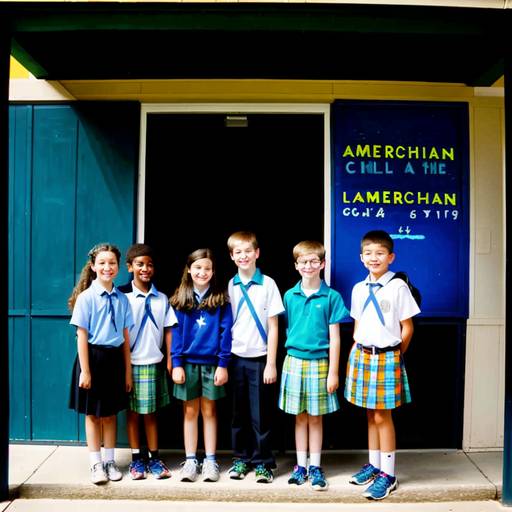
The 5th Grade Curriculum Outline is designed to provide a comprehensive educational framework across key subjects, promoting a well-rounded learning experience. In English Language Arts, students develop critical reading, writing, and communication skills through diverse texts and various writing forms. The mathematics component emphasizes problem-solving and foundational concepts in numbers, geometry, measurement, and algebraic thinking. Science education encourages curiosity and inquiry through explorations of earth systems, physical properties, and life sciences. Lastly, the social studies segment focuses on historical events, geographic understanding, civic knowledge, and basic economic principles, aiming to cultivate informed and responsible citizens. Overall, the curriculum fosters critical thinking, creativity, and collaboration among students, preparing them for future academic endeavors.