

The Kindergarten curriculum provides a comprehensive framework designed to foster foundational skills across various subject areas. In Language Arts, students focus on phonemic awareness, comprehension, and storytelling. The Mathematics component emphasizes number recognition, basic operations, and sorting objects. Science encourages inquiry about the natural world, covering topics such as living organisms, weather, and seasonal changes. Social Studies introduces concepts of community, citizenship, and cultural diversity. The Fine Arts section promotes creativity through visual arts and music, while Physical Education focuses on developing gross motor skills and encouraging active lifestyles. Finally, Health Education emphasizes personal wellness, hygiene, nutrition, and emotional understanding, ensuring a well-rounded educational experience for young learners.

The 1st Grade Curriculum encompasses a comprehensive educational framework designed to foster foundational skills across various subjects. In Language Arts, students develop reading, writing, and communication skills through phonics, comprehension activities, and engaging writing exercises. The Mathematics component emphasizes number operations, geometry, measurement, and algebraic thinking, promoting practical application and conceptual understanding. In Science, hands-on exploration covers physical science, life science, earth science, and introductory engineering principles. Social Studies focuses on history, geography, civics, and basic economics, encouraging awareness of community and global issues. Physical Education promotes motor skills, health, and social interaction, while Art and Music foster creativity and cultural appreciation. Additional subjects include foreign language basics, library skills, and technology integration to enhance learning and resource management. Overall, the curriculum aims to create an engaging and holistic learning environment for young students.

The Second Grade English Language Arts curriculum focuses on developing essential reading, writing, speaking, and listening skills for young learners. Students practice identifying main ideas and details in texts, making predictions, and recognizing elements of both fiction and non-fiction. They enhance their vocabulary through context clues and improve reading fluency with grade-appropriate materials. Writing instruction covers crafting complete sentences and engaging in narrative, informational, and persuasive writing, while also emphasizing the writing process from planning to publishing. Furthermore, students participate in collaborative discussions to enhance their speaking and listening abilities, learn proper grammar and punctuation, and develop skills in spelling and handwriting. Overall, this curriculum aims to build a strong foundation for literacy and effective communication.

The 3rd Grade English Language Arts curriculum focuses on developing students' reading, writing, speaking, and listening skills through a variety of engaging activities. Students will learn to identify key details in texts, summarize main ideas, and make inferences, while also expanding their vocabulary. In writing, they will explore different styles, including narratives and informative texts, and will gain proficiency in the writing process from planning to publishing. Additionally, the curriculum emphasizes effective communication through discussions and formal presentations, alongside mastery of grammar and language conventions. Complementing the language arts objectives, the curriculum also integrates essential skills in mathematics, science, and social studies to provide a comprehensive and well-rounded educational experience.
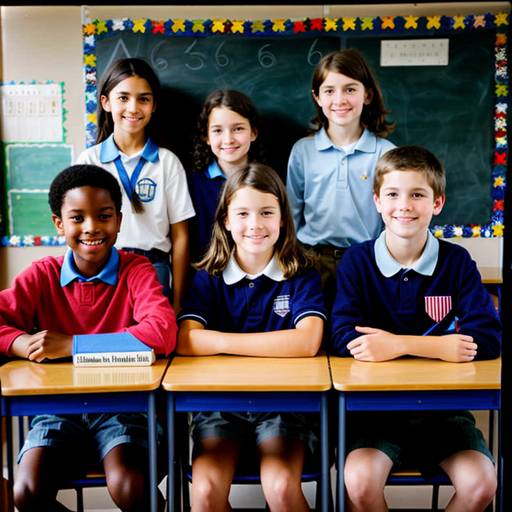
The 4th Grade English Language Arts curriculum is designed to foster essential literacy skills through a comprehensive approach that includes diverse reading experiences, engaging writing activities, and the development of speaking and listening abilities. Students will explore a variety of literary and informational texts, enhancing their comprehension and analytical skills. They will practice writing in multiple genres, mastering the writing process from prewriting to publishing, while also focusing on grammar and language conventions. The curriculum emphasizes interactive discussions and presentation skills, encouraging effective communication. Additionally, it integrates technology and cross-curricular applications to promote critical thinking, research skills, and real-world connections, ensuring a well-rounded literacy foundation for young learners.
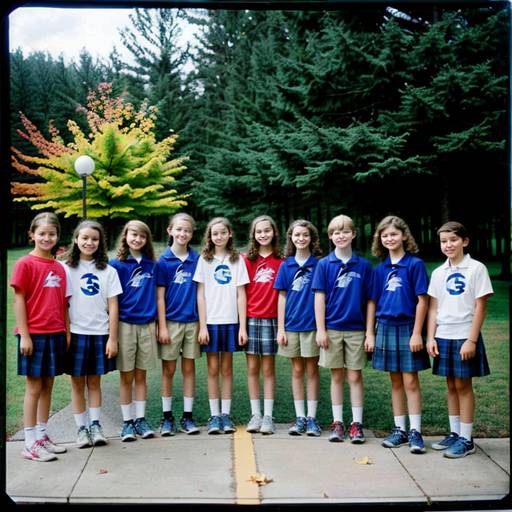
The fifth-grade curriculum encompasses a comprehensive approach to key academic subjects, including English Language Arts, Mathematics, Science, Social Studies, and Physical Education. In English Language Arts, students enhance their reading comprehension, writing abilities, and communication skills through diverse texts and collaborative discussions. The Mathematics section emphasizes number sense, algebraic thinking, geometry, data interpretation, and practical problem-solving skills. Science education fosters inquiry and hands-on experimentation across topics such as Earth and Space Science, Physical Science, Life Science, and technology design. The Social Studies component provides students with an understanding of geography, history, citizenship, and economic principles, while promoting cultural awareness. Additionally, the Physical Education program encourages fitness, teamwork, health education, and lifelong activity, ensuring a holistic development of each student.