

The comprehensive Kindergarten curriculum encompasses four core subjects: English Language Arts, Mathematics, Science, and Social Studies. In English Language Arts, students develop foundational literacy skills through reading, writing, speaking, and listening activities that focus on phonics, word recognition, and comprehension. The Mathematics section introduces essential concepts such as counting, addition, and subtraction while exploring shapes, patterns, and measurements. The Science curriculum fosters curiosity through hands-on experiments and inquiries into life, physical, and earth sciences, promoting critical thinking. Lastly, Social Studies encourages awareness of community and global citizenship by exploring various cultures, traditions, and the roles individuals play in society. Overall, the curriculum aims to provide a well-rounded educational experience that supports academic learning and social-emotional development.

The 1st Grade curriculum is designed to provide a well-rounded educational experience across core subjects, including English Language Arts, Mathematics, Science, Social Studies, and Physical Education. In English Language Arts, students will develop reading fluency and writing skills while enhancing their comprehension and vocabulary. The Mathematics component focuses on foundational skills in number sense, addition, subtraction, measurement, and geometry. Science lessons encourage inquiry and exploration of living organisms, physical properties, and Earth sciences. Social Studies nurtures an understanding of community, history, geography, and civic responsibility, while Physical Education promotes coordination, health, and fitness awareness. This curriculum emphasizes active engagement and critical thinking, essential for the holistic development of young learners.
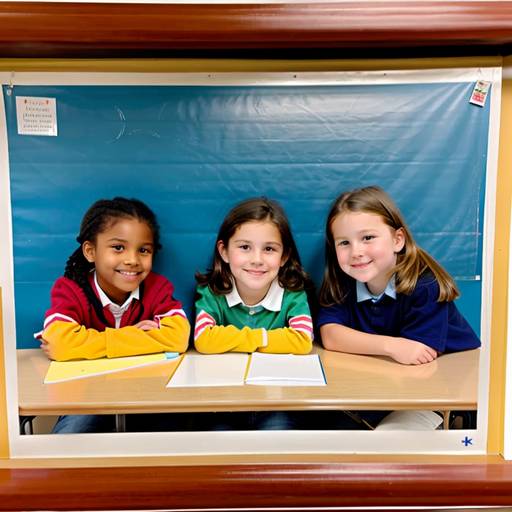
The 2nd Grade Curriculum encompasses a comprehensive approach to education, focusing on core subjects such as English Language Arts, Mathematics, Science, Social Studies, Physical Education, Art, and Music. In English Language Arts, students develop reading comprehension, phonics skills, and writing abilities through a variety of engaging texts and assignments. The Mathematics section emphasizes foundational concepts, including operations, place value, measurement, and geometry, encouraging problem-solving and critical thinking. Science topics cover Earth's systems, physical science principles, and life science explorations, promoting inquiry-based learning. Social Studies introduces geography, history, civics, and basic economics to help students understand their communities and diverse cultures. Additionally, the curriculum emphasizes the importance of physical health through sports and fitness activities, along with fostering creativity through art and music instruction. Overall, it aims to create a well-rounded educational experience that supports the academic and social development of young learners.

The curriculum for 3rd-grade education encompasses a comprehensive approach to essential subjects, focusing on English Language Arts, Mathematics, Science, Social Studies, Health Education, and Physical Education. In English Language Arts, students enhance reading comprehension, writing skills, and vocabulary development while engaging in speaking and listening activities. The Mathematics section promotes number sense, basic operations, fractions, geometry, and data interpretation. In Science, students explore living organisms, earth and space science, and fundamental physical science concepts through inquiry-based learning. Social Studies emphasizes geography, American history, government structures, and foundational economics. The Health Education component covers personal health, safety awareness, social-emotional health, and substance abuse prevention, while Physical Education fosters movement skills, fitness knowledge, sportsmanship, and safety in physical activities. Overall, the curriculum is designed to provide a well-rounded educational experience, encouraging critical thinking, creativity, and personal development.

The 4th-grade curriculum encompasses a diverse range of subjects designed to foster comprehensive student development. In Language Arts, students enhance their reading fluency and comprehension through various genres while improving their writing skills across narrative, informative, and opinion formats. The Mathematics segment focuses on building foundational skills in operations, measurement, and problem-solving. Science encourages exploration through life, physical, and earth sciences, emphasizing inquiry and hands-on experimentation. In Social Studies, students explore history, geography, and civics, promoting an understanding of their community and country. Lastly, Health Education emphasizes personal wellness, safety, nutrition, and social-emotional skills, guiding students in making healthy life choices and understanding interpersonal relationships.

The 5th Grade curriculum encompasses a broad spectrum of subjects designed to enhance students' academic skills and critical thinking abilities. In English Language Arts, students focus on reading comprehension, writing coherent narratives and informative texts, and expanding their vocabulary. The Mathematics section introduces foundational concepts, including number operations, algebraic thinking, geometry, and data analysis. The Science curriculum emphasizes inquiry-based learning, covering physical, life, and earth sciences, while integrating engineering design principles. Social Studies equips students with an understanding of history, geography, civics, and basic economics, fostering awareness of their roles as informed citizens. Overall, the curriculum promotes a well-rounded educational experience that prepares students for future academic challenges.