
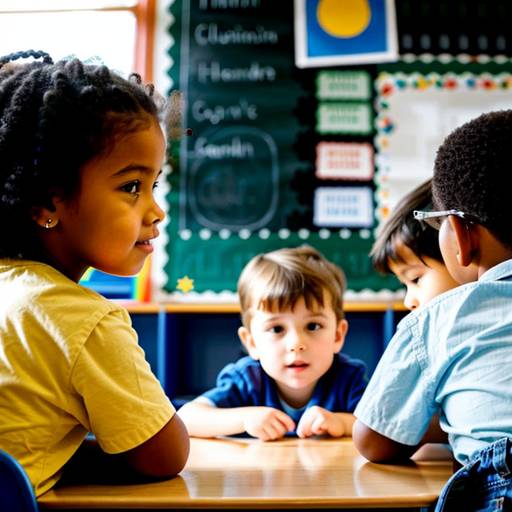
The Kindergarten curriculum encompasses a comprehensive approach to early childhood education, focusing on key developmental areas such as Language Arts, Mathematics, Science, Social Studies, Art, and Physical Education. In Language Arts, students engage in activities aimed at enhancing their literacy skills, including letter recognition, phonemic awareness, and basic storytelling. The Mathematics section emphasizes counting, number recognition, and simple arithmetic through hands-on learning experiences. For Science, children explore the natural world through observation and inquiry, while Social Studies introduces diverse cultures and promotes an understanding of community and global awareness. The Art program encourages creativity and self-expression through various artistic mediums, and the Physical Education component focuses on developing gross motor skills and fostering teamwork through active play. This balanced curriculum aims to nurture cognitive, social, emotional, and physical development in young learners.
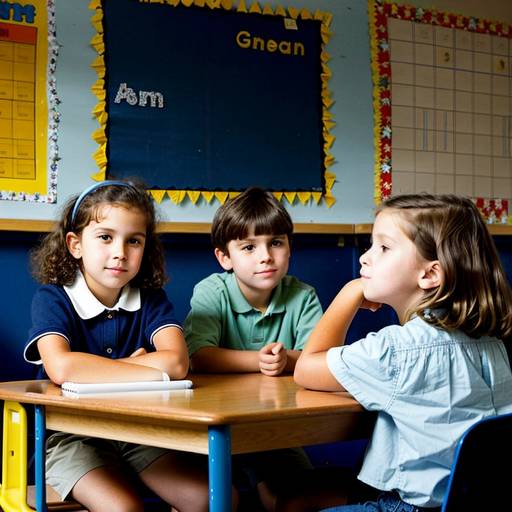
The 1st Grade Curriculum encompasses foundational skills in English Language Arts, Mathematics, Science, and Social Studies, designed to foster comprehensive development in young learners. In English Language Arts, students engage with reading through letter recognition, storytelling, and writing complete sentences, while enhancing their speaking and listening skills. The Mathematics component focuses on number sense, operations, geometry, and measurement, equipping students with essential problem-solving abilities. In Science, children explore physical properties, life cycles, and environmental awareness through hands-on experiences. The Social Studies section emphasizes civic understanding, historical awareness, and basic geography, promoting responsible citizenship and cultural appreciation. This curriculum provides a well-rounded approach to education that supports critical thinking and creativity.
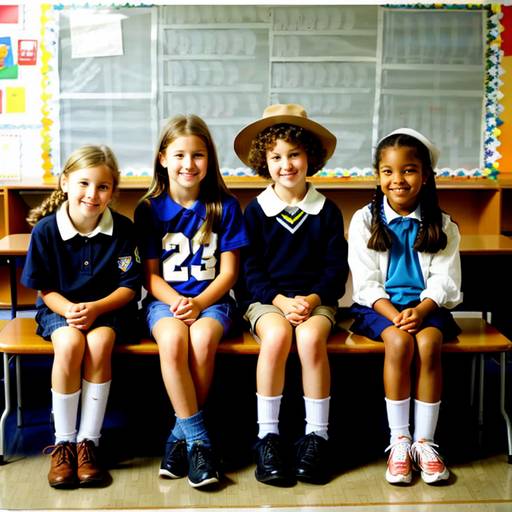
The 2nd grade curriculum encompasses a comprehensive foundation across multiple subjects, fostering a holistic approach to education. In English Language Arts, students develop essential reading, writing, speaking, and listening skills through diverse texts and creative assignments. The Mathematics program emphasizes number operations, measurement, and geometry, encouraging problem-solving and critical thinking. Science education promotes inquiry into physical sciences, life sciences, and Earth concepts, enhancing students' understanding of natural phenomena. Social Studies explores historical events, geographical awareness, and civic engagement, instilling a sense of community. Health education focuses on personal wellness, safety, and social-emotional learning. Finally, Physical Education promotes physical fitness and teamwork through various activities, fostering a well-rounded development for young learners.
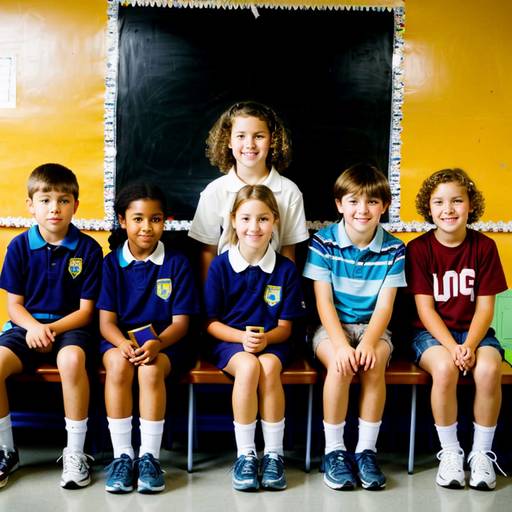
This comprehensive 3rd-grade curriculum focuses on fostering student engagement and development across various subjects, including Language Arts, Math, Science, Social Studies, Physical Education, Art, and Music. In Language Arts, students enhance their reading, writing, and speaking skills through exposure to diverse genres and collaborative discussions. The Math section emphasizes foundational concepts such as operations, measurements, and geometry through practical activities. In Science, students explore physical science, life science, and Earth science through hands-on experiments. The Social Studies curriculum covers geography, history, and civics, promoting an understanding of community and citizenship. Additionally, Physical Education encourages healthy habits through various activities, while the Art and Music components allow for creative expression and appreciation of the arts. A holistic wellness approach is incorporated to support students' social-emotional development, equipping them with essential skills for navigating their relationships and environments.
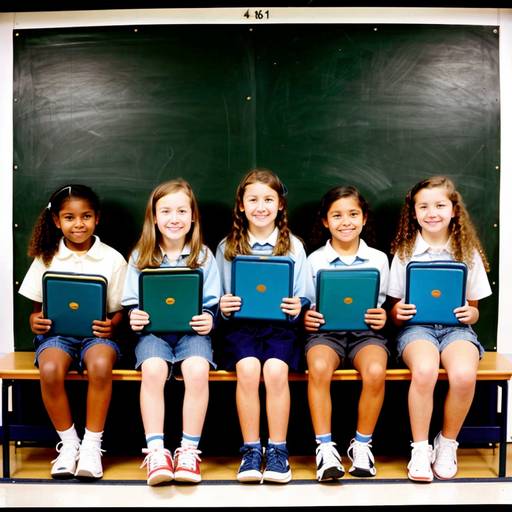
This comprehensive 4th-grade curriculum encompasses various subjects designed to promote holistic student development. In Language Arts, students enhance their reading and writing skills through diverse texts and structured writing assignments. The Mathematics section focuses on establishing a solid foundation in essential concepts such as arithmetic operations, fractions, decimals, and introductory geometry. Science instruction emphasizes hands-on exploration of Earth, life, and physical sciences, fostering inquiry and curiosity. Social Studies introduce learners to historical and cultural contexts, government fundamentals, and personal finance. Additionally, Physical Education promotes fitness and teamwork, while the Fine Arts component encourages creative expression through visual arts, music, and performance. Health Education focuses on personal well-being and healthy lifestyle choices, and a Technology segment equips students with essential digital skills and internet safety awareness. Together, these elements provide a well-rounded educational experience that prepares students for future academic success.
The 5th Grade Curriculum encompasses a structured framework across key subjects, including English Language Arts, Math, Science, and Social Studies. In English Language Arts, students develop literacy skills through diverse reading materials and writing exercises that encourage critical thinking and effective communication. The Math component focuses on deepening understanding of operations, geometry, and measurement through hands-on problem-solving and real-world applications. The Science curriculum promotes inquiry-based learning, where students explore physical, life, and earth sciences, fostering curiosity through experiments and investigations. Finally, the Social Studies section provides a comprehensive study of history, geography, and civics, enabling students to understand cultural impacts and their roles as informed citizens. Together, these subjects create an engaging and interdisciplinary educational experience for 5th graders.