
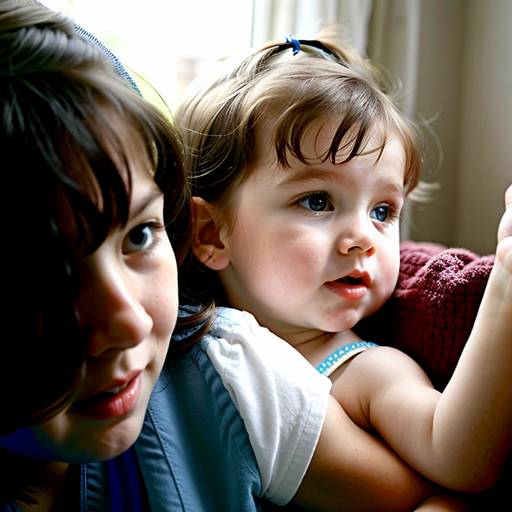
The curriculum for infants aged 6 months to 1 year emphasizes a comprehensive approach to early development across five key areas: physical, social and emotional, language and literacy, mathematics, and creative arts. It supports physical growth through activities that encourage movement and exploration, while fostering secure attachments and emotional expression to promote social and emotional well-being. Language development is facilitated through interactive reading sessions and auditory engagement, helping infants recognize communication patterns. Foundational math concepts are introduced through hands-on activities that encourage cognitive development, and creative arts are integrated throughout to promote imaginative expression and fine motor skills. This well-rounded approach ensures an enriching environment for infants, fostering growth and preparation for future learning experiences.
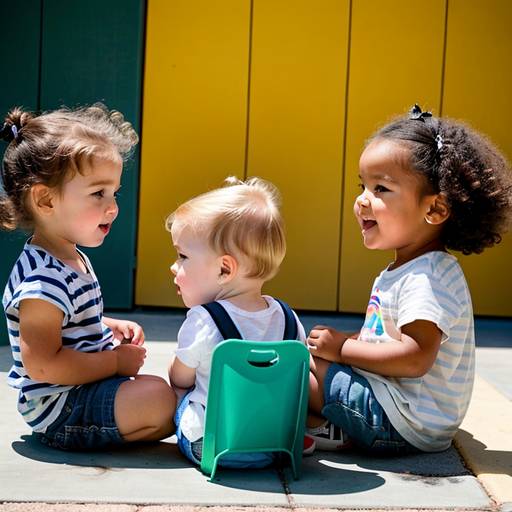
This comprehensive curriculum for toddlers aged 1 to 3 years is designed to support holistic development across multiple domains, including Language and Literacy, Mathematics, Science, Social and Emotional Development, and Physical Development. It promotes language growth through interactive conversations and storytelling, while early mathematics skills are fostered through counting, sorting, and pattern recognition activities. Hands-on science exploration encourages curiosity and understanding of the natural world, and social and emotional learning is supported through relationship-building and conflict resolution strategies. Additionally, the program emphasizes physical development through active play and fine motor skill enhancement, equipping toddlers with essential skills for future learning and growth in a supportive environment.
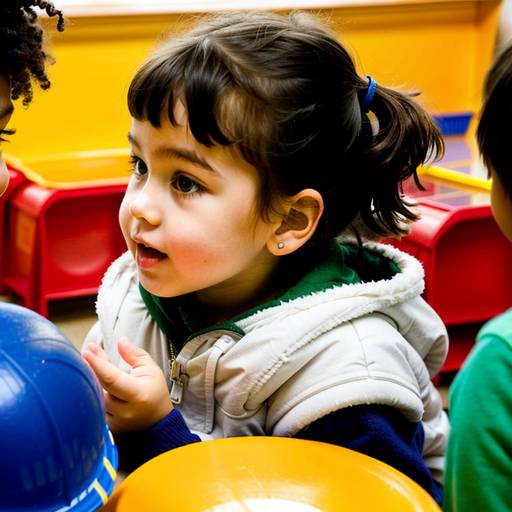
The curriculum for preschool education focuses on fostering holistic development in young learners through a comprehensive approach that includes key areas such as language arts, mathematics, science, social studies, and physical education. It emphasizes foundational listening, speaking, and early literacy skills by incorporating storytelling and creative expression. Mathematical concepts are explored through interactive games and hands-on activities that promote counting and shape recognition. Scientific inquiry is encouraged through observation and experimentation, helping children understand the natural world. Additionally, social studies introduce concepts of identity and community, fostering empathy and social skills. Physical education activities promote gross and fine motor development, while also instilling healthy habits and teamwork. Overall, the curriculum aims to create a nurturing learning environment that prepares preschoolers for future academic and social success.