
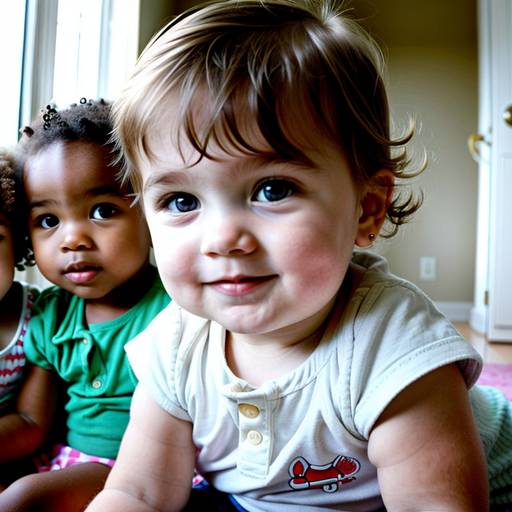
This comprehensive curriculum is designed for infants aged 6 months to 1 year, focusing on key developmental areas including social-emotional growth, physical development, language and literacy, cognitive skills, creative expression, approaches to learning, and social studies. It emphasizes the importance of secure attachments and trust between infants and caregivers, promotes healthy motor skill development through active exploration, and encourages early language acquisition via interactive storytelling and verbal engagement. Additionally, the curriculum supports cognitive development by fostering curiosity and problem-solving skills, while creative arts activities provide opportunities for self-expression. It also emphasizes social awareness and belonging within a community context, ensuring a well-rounded foundational experience for young learners.
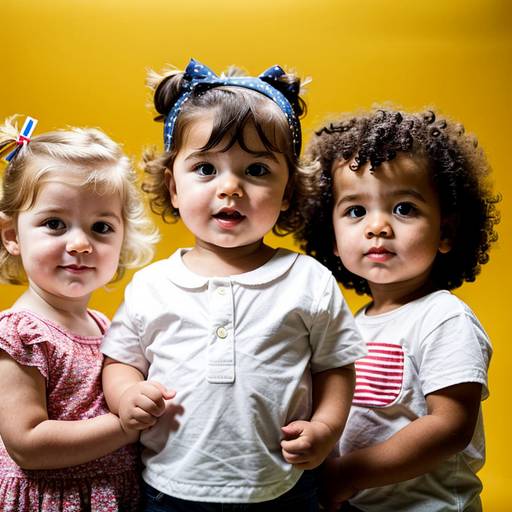
The curriculum for toddlers aged 1 to 3 years is designed to promote holistic development across key domains, including language and literacy, mathematics, science, social studies, physical development, and creative arts. It focuses on fostering language skills through storytelling and interactive activities, introducing foundational mathematical concepts like counting and shapes through hands-on experiences, and nurturing scientific curiosity through observations of nature and simple experiments. Social studies content encourages awareness of diverse cultures and community roles, while physical development is addressed through activities that enhance motor skills and coordination. Creative arts are incorporated to allow for self-expression and imaginative exploration, creating a well-rounded educational experience that lays the groundwork for future learning.
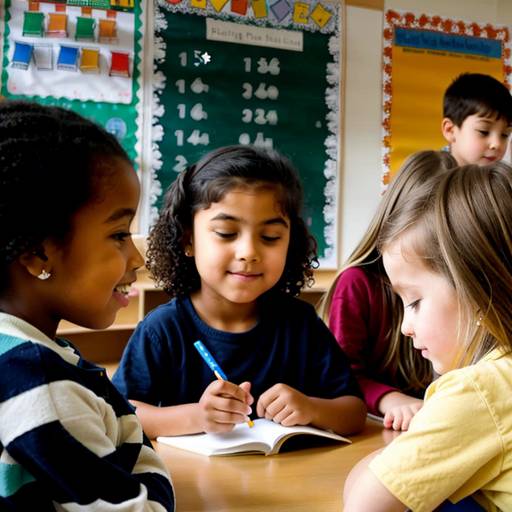
The preschool curriculum focuses on fostering holistic development in young children across various domains, including language arts, mathematics, science, social studies, fine arts, and physical education. It emphasizes literacy and communication skills through letter recognition and oral language activities, while mathematics introduces basic counting, addition, and pattern recognition. In science, children engage in hands-on exploration of their environment, learning about plants, animals, and seasonal changes. Social studies promote an understanding of community and cultural diversity, and fine arts allow for creative expression through various artistic mediums. Finally, the physical education component encourages the development of gross motor skills and healthy lifestyle habits through active play and teamwork. This integrated approach aims to nurture curiosity, creativity, and foundational skills essential for lifelong learning.